
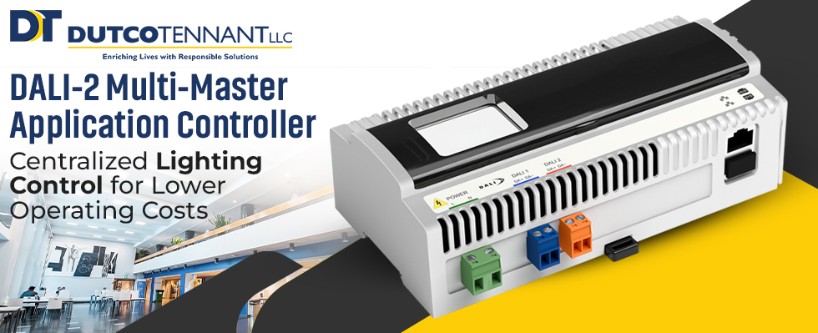
Reduce Operational Costs with DALI-2 Multi-Master Lighting Control
Lighting is a significant part of building operating expenses, particularly in commercial facilities where multiple areas require illumination throughout the day. Fixed lighting schedules, unnecessary energy consumption and limited control over individual zones can increase electricity costs without improving occupant comfort. As buildings become more complex, facility managers need a practical way to match lighting operation with actual usage.
A DALI Application Controller helps address these challenges by coordinating lighting devices, sensors and automation commands within a connected network. With multi-master communication, lighting systems can respond to changing occupancy, daylight availability and operational requirements while giving building operators greater flexibility over how different spaces are illuminated.
Identify Where Lighting Energy Is Being Wasted
Reducing lighting costs begins with understanding how spaces are occupied and when artificial lighting is genuinely required. In many facilities, lights remain at full brightness even when daylight is sufficient or rooms are temporarily unoccupied. These patterns can be difficult to correct when several areas share the same switching arrangement.
A detailed review of lighting operation should consider working hours, occupancy patterns, natural light availability and the level of illumination required for different activities. This helps identify where automated dimming, scheduling or zone-based control could reduce unnecessary consumption.
Match Lighting Output to Actual Building Use
Different spaces rarely need identical lighting conditions. Meeting rooms may be occupied intermittently, corridors experience changing foot traffic, and open-plan offices often receive varying amounts of daylight.
A DALI-2 lighting control arrangement can use compatible occupancy and light sensors to adjust lighting according to these conditions. Instead of relying entirely on fixed switching times, the system can provide appropriate illumination when spaces are in use and reduce output when demand decreases.
This approach supports energy management without requiring occupants to manually adjust lighting throughout the day.
Understand the Cost Advantage of Multi-Master Communication
Conventional centralized control arrangements may depend on a single application controller to coordinate commands within a lighting network. A multi-master architecture allows more than one compatible application controller to operate on the same DALI bus, supporting event-driven communication and greater flexibility in control design.
In a large commercial building, this arrangement can help coordinate lighting across areas with different operating requirements. Multiple control devices can participate in the system while lighting commands remain organized according to the configured automation strategy.
The cost advantage comes from how effectively this flexibility is used. Appropriate control arrangements can reduce unnecessary lighting operation and make future changes easier to manage.
Coordinate Sensors, Switches and Lighting Scenes
The dali lighting control system can combine compatible input devices with application controllers to create lighting responses suited to individual spaces.
Common control functions include:
- Occupancy-based operation: Adjusting lighting when movement or presence is detected.
- Daylight-responsive dimming: Reducing artificial lighting output when sufficient natural light is available.
- Scene management: Applying predefined brightness settings for meetings, presentations or normal working conditions.
- Time-based control: Scheduling lighting changes around established operating hours.
- Zone coordination: Managing different areas according to their individual requirements.
These functions depend on the connected devices and system configuration. Their effectiveness should be assessed against actual building usage rather than assuming every area requires the same automation settings.
Avoid Unnecessary Lighting During Unoccupied Hours
After-hours lighting is a common source of avoidable electricity consumption. Offices, educational facilities and hospitality properties may have spaces that remain illuminated long after regular activities have ended.
An automated control strategy can reduce lighting output in designated areas while maintaining illumination where it is needed for safety, security or ongoing operations. Occupancy sensors and scheduled commands can work together to provide more appropriate lighting during evenings, weekends and periods of reduced activity.
Careful commissioning is important. Incorrect sensor placement or overly aggressive switching settings can affect user comfort and should be corrected before the system enters regular operation.
Use Lighting Control to Simplify Facility Management
Electricity consumption is only one part of the cost of operating a lighting installation. Facility teams must also manage configuration changes, maintenance activities and the lighting requirements of different occupants.
A lighting dali system provides addressable control, allowing compatible luminaires and groups to be managed through digital commands. This can make lighting adjustments more convenient than changing physical switching arrangements whenever a room layout or operating requirement changes.
Reduce Disruption When Building Layouts Change
Commercial interiors frequently undergo modifications as departments expand, tenants change or rooms are assigned new functions. A lighting arrangement that cannot accommodate these changes may require additional electrical work.
Addressable lighting allows suitable devices to be reassigned to groups and scenes through system configuration. For example, an office divided into separate meeting rooms may need different lighting behavior for each new space.
Where the existing equipment and wiring support the revised arrangement, changes can be implemented through reconfiguration rather than extensive modifications to the installation. This can reduce disruption and help control future adaptation costs.
Make Maintenance More Systematic
Maintenance efficiency improves when technicians can identify lighting devices and understand their operating status without relying entirely on manual inspections.
DALI communication supports status queries from compatible control gear, while the available monitoring and diagnostic functions depend on the application controller and associated management software.
Facility teams can use supported information to investigate faults, verify device responses and plan maintenance activities more effectively. However, advanced reporting, remote monitoring and automatic fault notifications should only be expected where the selected system provides those functions.
A well-documented installation should also maintain current records of device addresses, lighting groups, control settings and configuration changes.
Plan the Lighting Network Around Long-Term Operating Needs
A successful lighting installation requires more than selecting a controller with advanced communication capabilities. Network layout, device compatibility, commissioning and future expansion should all be considered during the planning stage.
Each DALI subnet has defined limits for connected devices, and the required bus power supply must be included in the design. Larger facilities may need multiple subnets and suitable network integration to coordinate lighting across different floors or buildings.
Check Compatibility Before Selecting Control Equipment
The dali lighting control panel or wider control arrangement should be evaluated according to the devices it must communicate with and the automation functions required.
Important considerations include:
- Compatibility between application controllers, LED drivers and input devices.
- Availability of suitable DALI bus power and network capacity.
- Support for the intended lighting scenes and control strategies.
- Integration requirements for building management or automation systems.
- Access for commissioning, configuration and maintenance.
- Expansion requirements for future lighting zones.
DALI-2 certification provides a standardized basis for interoperability, but individual device functions and integration capabilities still need verification.
Commission the System Around Real Occupancy Patterns
A technically functional control network does not automatically deliver the lowest operating cost. Savings depend on whether lighting behavior matches the way occupants actually use the building.
Commissioning should therefore include sensor testing, lighting-level adjustments, scene verification and checks during different operating periods.
After installation, facility managers can compare electricity consumption and operating hours against an appropriate baseline. Reviewing occupant feedback alongside energy data helps identify settings that may need adjustment.
Evaluate Savings Across the Lighting System Lifecycle
The financial value of a Lighting Control Solution should be measured across installation, operation and future maintenance rather than focusing only on the initial equipment price.
A more complete assessment considers:
- Existing lighting electricity consumption and expected reductions.
- Hours of operation across individual zones.
- Installation, programming and commissioning costs.
- Maintenance requirements and supported diagnostic functions.
- Future reconfiguration or expansion expenses.
- Occupant comfort and operational requirements.
For example, reducing lighting output in an intermittently occupied meeting room may produce a different result from applying daylight dimming near office windows. The potential savings depend on the connected lighting load, actual usage patterns and selected control settings.
The most useful comparison is between measured consumption before implementation and performance after the system has been properly commissioned and adjusted.
Connect Intelligent Lighting Control with Building Efficiency Goals
Modern commercial buildings need lighting arrangements that balance energy consumption, occupant requirements and manageable maintenance practices. Multi-master control provides flexibility for coordinating compatible lighting devices and automation functions without treating every area as a single operating zone.
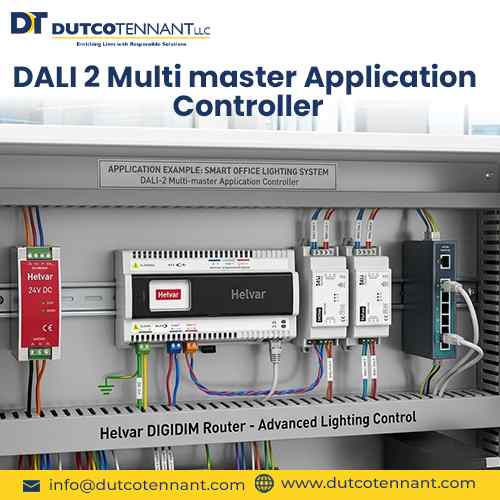
We offer the DALI-2 Multi-master Application Controller within its Building Technology Solutions range. Its support for multi-master communication, lighting scene management and integration with compatible control components makes it relevant to commercial offices, hospitality properties, educational facilities and smart building applications.
The greatest operational benefit comes from combining appropriate equipment selection with thoughtful system design and ongoing performance review.
A DALI Application Controller can contribute to lower operating expenses when lighting schedules, sensor responses and zone settings reflect actual building requirements. By addressing unnecessary energy use, simplifying lighting adjustments and planning for future changes, facility managers can establish a more efficient approach to long-term lighting operation.