



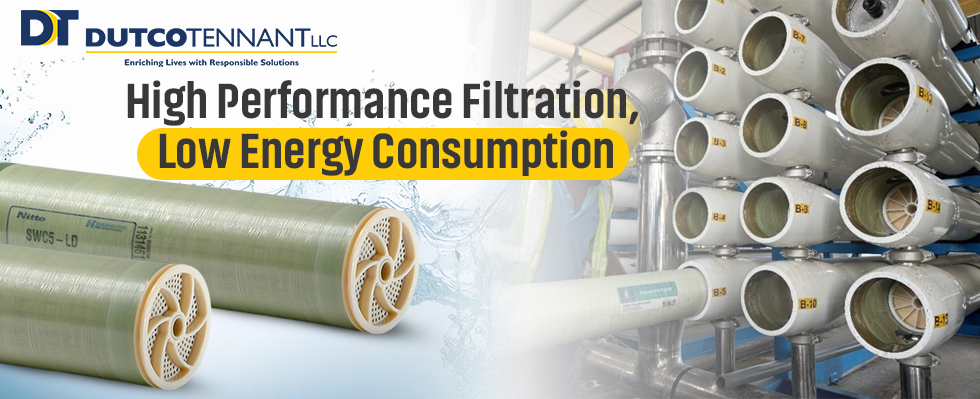
How Energy Efficient RO Membranes Help Reduce Desalination and Water Treatment Costs
Water demand across the UAE and wider GCC region continues increasing because of rapid urbanisation, industrial expansion, population growth, and infrastructure development. As freshwater resources remain limited in many parts of the region, desalination and advanced water treatment systems have become essential for supporting residential, commercial, industrial, and municipal water requirements.
Reverse osmosis technology plays a major role in modern desalination infrastructure because it provides an effective method for removing dissolved salts, contaminants, and impurities from seawater and industrial feedwater sources. However, one of the biggest operational challenges associated with reverse osmosis systems is energy consumption.
Large-scale desalination plants require significant pumping pressure to force water through membrane elements. This pressure demand directly affects operational cost, power consumption, equipment loading, and long-term maintenance requirements.
This is why an energy saving RO membrane has become increasingly important in modern water treatment infrastructure. These advanced membrane systems are engineered to achieve high permeate flow and effective salt rejection while operating at lower pressure conditions compared to conventional membrane elements.
Across the GCC region, utilities and industrial operators are increasingly adopting energy-efficient membrane technologies to improve sustainability, reduce operational expenditure, and optimise long-term desalination performance.
Why Water Treatment Energy Consumption Is a Major Concern
Reverse osmosis systems depend heavily on pressure-driven filtration processes.
During operation:
- Feedwater is pressurised
- Water molecules pass through semi-permeable membranes
- Dissolved salts and contaminants are separated
- Purified water is collected as permeate
The higher the pressure requirement, the greater the energy demand placed on:
- High-pressure pumps
- Motors
- Energy recovery systems
- Electrical infrastructure
In large desalination plants, energy consumption represents one of the highest operating costs.
Without efficient membrane performance, facilities may experience:
- Higher electricity consumption
- Increased operating expenditure
- Greater equipment stress
- Reduced system efficiency
- Increased maintenance frequency
- Higher carbon emissions
As energy prices and sustainability targets become more important, water treatment operators are prioritising technologies capable of reducing operational pressure demand while maintaining reliable filtration performance.
How Reverse Osmosis Membranes Work
RO membranes are designed using semi-permeable materials that allow water molecules to pass while rejecting dissolved salts and impurities.
During filtration:
- Pressurised feedwater enters the membrane element
- Water permeates through the membrane surface
- Salts and contaminants remain concentrated on the reject side
- Purified water exits as permeate
The efficiency of this process depends on:
- Membrane material quality
- Feedwater conditions
- Operating pressure
- Salt rejection capability
- Flow design
- Fouling resistance
Modern energy saving RO membrane technology focuses on improving water permeability without compromising rejection efficiency.
This allows operators to achieve required production output at lower operating pressure.
How Energy Efficient Membranes Reduce Operating Costs
One of the main advantages of advanced membrane systems is reduced pressure requirement.
Lower pressure operation helps:
- Reduce power consumption
- Lower pump loading
- Improve energy efficiency
- Reduce equipment wear
- Lower operating cost
For large-scale desalination plants, even a small reduction in pressure demand can create substantial long-term energy savings.
Additional benefits include:
- Improved permeate productivity
- Reduced operational stress
- Better system optimisation
- Lower maintenance requirements
- Extended equipment lifespan
These advantages are particularly important in GCC countries where desalination infrastructure operates continuously under high production demand.
Why Desalination Is Essential Across the GCC
The UAE and wider GCC region rely heavily on desalination because of limited natural freshwater availability.
Seawater desalination supports:
- Municipal water supply
- Industrial processing
- Commercial infrastructure
- District cooling systems
- Utility infrastructure
- Agricultural applications
As urban development continues expanding, water demand also increases significantly.
Governments across the region continue investing heavily in:
- Large desalination plants
- Water reuse systems
- Smart utility infrastructure
- Sustainable water management programmes
Energy-efficient RO technologies help these projects improve long-term sustainability while controlling operational expenditure.
Why Membrane Fouling Reduces Performance
One of the biggest operational challenges in reverse osmosis systems is membrane fouling.
Fouling occurs when contaminants accumulate on membrane surfaces, reducing flow efficiency and increasing pressure demand.
Common fouling causes include:
- Biological contamination
- Organic material buildup
- Scaling deposits
- Suspended solids
- Chemical precipitation
When fouling increases:
- Water production decreases
- Pressure demand rises
- Energy consumption increases
- Cleaning frequency becomes higher
- Membrane lifespan reduces
Modern membrane technologies are therefore engineered to improve fouling resistance while maintaining stable filtration performance.
Proper pretreatment systems also play a critical role in protecting membrane efficiency.
Importance of Pretreatment Systems
Even the most advanced membrane systems require effective pretreatment infrastructure.
Pretreatment helps remove:
- Suspended solids
- Organic contaminants
- Biological matter
- Chlorine residues
- Large particles
Common pretreatment systems include:
- Multimedia filtration
- Ultrafiltration systems
- Cartridge filters
- Chemical dosing systems
- Activated carbon filtration
Efficient pretreatment improves:
- Membrane lifespan
- Operational stability
- Cleaning intervals
- Energy efficiency
This helps facilities maintain consistent water production while reducing maintenance-related downtime.
Industrial Applications Beyond Desalination
Reverse osmosis technology is not limited to seawater desalination alone.
Energy-efficient membrane systems are also widely used in:
- Industrial Water Treatment: Supporting manufacturing and processing operations.
- Power Generation Facilities: Providing high-purity process water.
- Food and Beverage Production: Supporting hygienic water treatment requirements.
- Pharmaceutical Infrastructure: Producing purified process water.
- Wastewater Reuse Systems: Helping recover water for industrial reuse applications.
Across these sectors, efficient membrane performance directly affects operational reliability and production quality.
Why Sustainability Goals Are Driving Technology Adoption
Governments and industries across the GCC are increasingly focusing on:
- Energy reduction
- Carbon emission control
- Water conservation
- Sustainable infrastructure development
Water treatment facilities are therefore expected to improve operational efficiency while lowering environmental impact.
Advanced membrane technologies support these objectives by:
- Reducing energy demand
- Improving recovery rates
- Lowering operational waste
- Reducing chemical consumption
- Supporting efficient water reuse
These advantages align closely with regional sustainability initiatives and smart infrastructure development goals.
Material Engineering Plays a Major Role
Membrane performance depends heavily on material design and manufacturing quality.
Modern membrane systems are engineered to provide:
- High salt rejection
- Stable permeate flow
- Pressure resistance
- Fouling resistance
- Chemical durability
- Long operational lifespan
Consultants and plant operators evaluate:
- Feedwater quality
- Recovery targets
- Operating pressure
- Cleaning requirements
- System compatibility
- Energy efficiency goals
before selecting membrane solutions.
Proper membrane selection helps optimise overall plant performance and operational reliability.
Why Maintenance Efficiency Matters
Large desalination and treatment facilities operate continuously under demanding conditions.
Operators therefore prioritise systems capable of reducing:
- Downtime
- Cleaning frequency
- Equipment wear
- Replacement cost
- Operational interruptions
Modern membrane technologies improve maintenance efficiency by maintaining more stable operating performance over longer periods.
Combined with proper monitoring systems, operators can:
- Track membrane condition
- Monitor differential pressure
- Analyse permeate quality
- Predict cleaning intervals
- Improve operational planning
This supports more efficient plant management while reducing unexpected shutdown risk.
Growing Demand Across GCC Infrastructure
The GCC region continues investing heavily in:
- Desalination plants
- Industrial utilities
- Water reuse systems
- Smart infrastructure
- Sustainable energy programmes
- Advanced treatment facilities
As infrastructure projects become larger and more technologically advanced, demand is increasing for water treatment systems capable of delivering:
- Lower energy consumption
- Higher operational efficiency
- Reduced environmental impact
- Improved reliability
An energy saving RO membrane remains a critical component in achieving these objectives across modern desalination and water treatment infrastructure.
Future of Energy-Efficient Water Treatment
Water infrastructure is increasingly becoming part of integrated smart utility ecosystems.
Future treatment plants are expected to incorporate:
- Real-time monitoring systems
- AI-based operational optimisation
- Smart energy management
- Automated cleaning systems
- Predictive maintenance platforms
Advanced membrane technologies will continue evolving to support:
- Lower operating pressure
- Higher recovery rates
- Improved fouling resistance
- Reduced chemical dependency
As sustainability targets become stricter, energy-efficient water treatment solutions will play an even larger role in regional infrastructure development.
Conclusion
Water treatment infrastructure across the GCC depends heavily on reliable and energy-efficient reverse osmosis systems.
An energy saving RO membrane helps desalination and treatment facilities reduce operational pressure demand, improve filtration efficiency, lower energy consumption, and support long-term sustainability goals.
As the UAE and wider GCC region continue expanding their investment in water infrastructure, advanced membrane technologies will remain essential for supporting efficient, cost-effective, and environmentally responsible water treatment operations.
Dutco Tennant LLC is a trusted supplier of advanced water treatment and reverse osmosis solutions across the UAE and GCC region. The company provides high-performance RO membrane technologies designed to support energy efficiency, operational reliability, and long-term water treatment performance for industrial and municipal applications.
For reliable RO membrane solutions and expert water treatment support, contact Dutco Tennant LLC today.