



Indoor and Outdoor Benches: A Selection Guide for Commercial and Public Spaces in the UAE
Indoor and Outdoor Benches: A Selection Guide for Commercial and Public Spaces in the UAE
Seating is an essential component of architectural and landscape planning, influencing how people interact with commercial buildings, public spaces and recreational facilities. Beyond providing a place to rest, well-planned bench seating supports pedestrian movement, visitor comfort, accessibility and the functional organisation of shared spaces.
The seating requirements of a corporate reception area differ considerably from those of a public park or an outdoor plaza. Indoor environments require furniture that complements architectural finishes and accommodates available floor space, while outdoor installations must withstand environmental exposure and frequent public use.
Material composition, structural design, seating configuration, surface finishes, ergonomics and installation methods are among the factors that influence the long-term suitability of a bench.
As a benches supplier in UAE and GCC markets, Dutco Tennant LLC supplies indoor and outdoor seating solutions through its Construction Specialities portfolio, addressing the requirements of commercial developments, public infrastructure and landscaped environments.
This guide explores different bench configurations, material selection, functional benefits, installation considerations and practical applications to help architects, consultants, contractors and procurement professionals specify suitable seating solutions.
Indoor Benches for Commercial Interiors and Shared Spaces
Commercial buildings require seating that accommodates visitors, employees and customers without interfering with everyday activities. Unlike individual chairs, benches can accommodate multiple users along a shared seating surface, making them particularly useful in areas with limited space or fluctuating occupancy.
Indoor Benches are seating units designed for enclosed architectural environments, including corporate offices, shopping centres, reception areas and institutional buildings. Their construction combines seating comfort, structural stability and visual compatibility with interior finishes.
Material Composition and Structural Design
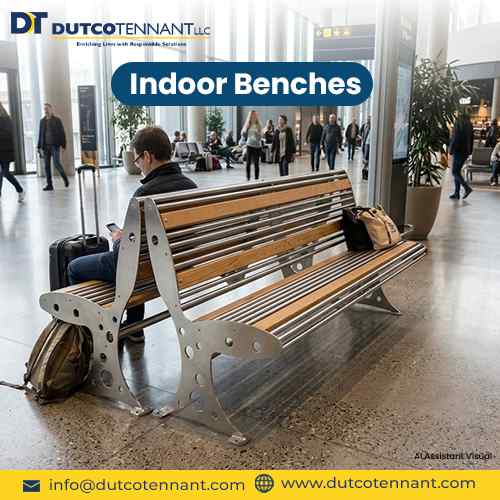
Indoor seating benches can combine wooden seating surfaces with metal supporting structures to achieve a balance between comfort, durability and architectural appearance.
One configuration, the MOB-340B indoor bench, combines impregnated pine wood with laser-cut stainless steel legs. The wooden seating components introduce a natural finish, while the metal supports provide the structural framework.
The combination of timber and stainless steel makes this type of furniture relevant to commercial interiors where natural materials and contemporary architectural finishes are used together. Dimensions, finishes and construction materials may vary across other bench models.
Indoor Benches for Corporate Offices and Reception Areas
Office reception spaces accommodate visitors who may be waiting for appointments, meetings or access to different departments.
Reception area benches provide a designated seating arrangement without requiring numerous individual furniture units. Their continuous seating format can help maintain an organised layout, particularly in reception spaces positioned alongside entrance halls or corridors.
Modern indoor bench seating can also complement materials such as timber wall finishes, natural stone flooring and metal architectural elements, supporting consistency throughout the interior design.
For example, a corporate headquarters with a centrally located reception desk may incorporate benches along the perimeter of the waiting area. This arrangement provides seating while preserving circulation between building entrances, security checkpoints and lift lobbies.
Lobby and Waiting Area Seating
Hotels, healthcare facilities, educational institutions and commercial developments experience different patterns of visitor occupancy throughout the day.
When specifying indoor benches for a lobby, the expected duration of use becomes an important consideration. A backless configuration may suit short-duration seating, while benches with backrests and armrests can provide additional support for users who need to remain seated for longer periods.
Lobby seating benches should also be positioned to maintain unobstructed access to entrances, lifts and reception counters.
In healthcare environments, waiting area benches require particular attention to surface cleanability, compatibility with approved cleaning products and ease of access for users with different mobility requirements.
Hallway Benches and Circulation Areas
Hallway benches provide resting points within circulation areas such as shopping centre corridors, university buildings and large institutional facilities.
Their dimensions must be coordinated with the available corridor width. Seating should not reduce the required pedestrian clearance or obstruct emergency exits and accessible routes.
Where space is limited, compact or backless commercial indoor benches may be considered, provided they satisfy the project's accessibility and seating requirements.
Outdoor Benches for Parks, Plazas and Landscaped Environments
Outdoor seating forms part of the wider landscape infrastructure of parks, pedestrian routes, commercial developments and urban public spaces. Unlike furniture installed within enclosed buildings, external seating is exposed to changing temperatures, direct sunlight, airborne dust, moisture and frequent public use.
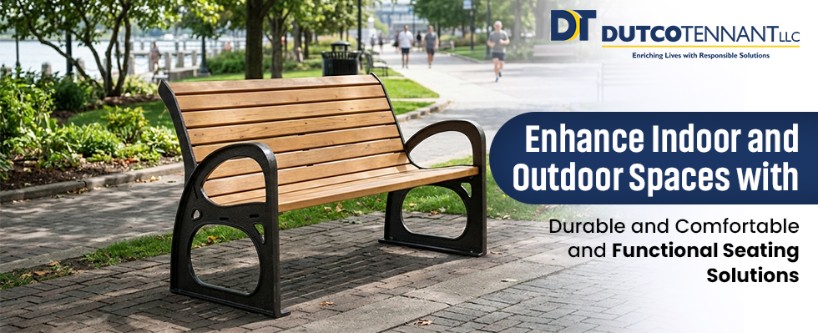
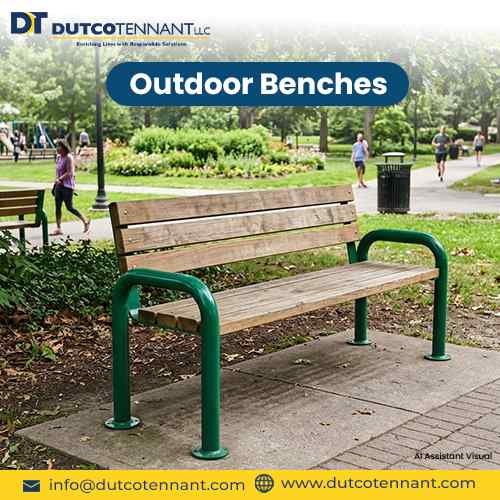
Outdoor Benches are seating solutions designed for external environments, providing designated resting and social interaction areas within landscaped and public spaces.
Their suitability depends on material durability, structural stability, surface protection and compatibility with the surrounding landscape design.
Material Selection for Outdoor Bench Seating
Outdoor benches are available in various material combinations, including treated timber, coated metal frameworks and concrete supporting bases. Each material contributes differently to structural performance, seating comfort and environmental suitability.
| Material | Functional characteristics | Selection consideration |
|---|---|---|
| Treated timber | Natural appearance and comfortable seating surface | Requires periodic inspection and surface maintenance |
| Stainless steel | Structural strength and corrosion resistance | Appropriate grade selection for environmental exposure |
| Coated steel | Structural stability with protective surface finishes | Coating integrity must be maintained |
| Concrete | Substantial supporting mass and architectural versatility | Requires suitable foundations and handling arrangements |
| Timber and metal combinations | Combines natural seating surfaces with structural metal supports | Connections and material protection require consideration |
In the UAE and GCC, material selection should account for both structural durability and seating surface temperatures. Metal surfaces exposed to direct sunlight can become uncomfortable during periods of intense heat. Timber seating components and appropriately shaded installations may help improve user comfort.
Outdoor Benches for Parks and Community Gardens
Public parks require seating arrangements that accommodate visitors of different age groups and mobility levels. Benches positioned along walking routes, recreational areas and landscaped gardens provide opportunities for rest and social interaction.
When specifying outdoor benches for parks in the UAE, landscape consultants should consider pedestrian movement, shade availability, seating orientation and maintenance access.
Outdoor park benches with backrests can provide additional support for elderly visitors and individuals requiring longer resting periods. Armrests may also assist users when sitting down or standing up.
Outdoor garden benches featuring timber and metal combinations are particularly relevant to residential communities, landscaped courtyards and recreational developments where seating must complement the surrounding greenery.
Outdoor Benches for Plazas and Promenades
Urban plazas and commercial promenades often require furniture that accommodates high pedestrian volumes while maintaining an open architectural layout.
Backless benches can provide seating access from either side, where their design permits, making them useful in open public spaces. Conventional benches with backrests are more appropriate where seating orientation needs to be directed towards landscaped areas, waterfront views or pedestrian activities.
Modular configurations offer additional flexibility. Available outdoor bench designs include single, double and triple seating arrangements, with selected models incorporating backrests or integrated coffee tables.
These configurations allow landscape designers to establish individual resting points or shared seating areas according to the intended use of the space.
Commercial Outdoor Benches for High-Traffic Developments
Commercial developments such as shopping centres, business parks and mixed-use facilities require exterior seating that supports frequent occupancy and coordinated public access.
Commercial outdoor benches can be positioned near building entrances, pedestrian connections and external waiting areas. Freestanding or surface-secured configurations may be selected according to the site's operational and security requirements.
For permanent public installations, appropriate anchoring helps limit unintended movement. The fixing arrangement must be coordinated with the supporting pavement or foundation rather than relying solely on the weight of the furniture.
Indoor Benches vs Outdoor Benches: Technical and Functional Comparison
Although indoor and outdoor benches perform the same basic seating function, their construction and installation requirements reflect different operating environments.
| Comparison parameter | Indoor Benches | Outdoor Benches |
|---|---|---|
| Primary function | Seating within commercial and institutional interiors | Seating within landscaped and public environments |
| Typical materials | Wood, metal and upholstered finishes | Treated timber, coated metal and concrete |
| Environmental exposure | Controlled indoor conditions | Sunlight, heat, dust, humidity and moisture |
| Design priority | Ergonomics and interior coordination | Environmental durability and landscape integration |
| Seating configurations | Reception, lobby, hallway and waiting area seating | Park, garden, plaza and modular seating |
| Installation options | Freestanding or floor-secured | Freestanding or surface-secured |
| Surface protection | Interior finishes and cleaning resistance | Exterior finishes and weather protection |
| Maintenance requirements | Routine cleaning and inspection | Cleaning, finish inspection and environmental maintenance |
| Installation coordination | Interior fit-out and finished flooring | Civil works, paving and landscaping |
| Typical applications | Offices, hospitals, hotels and educational institutions | Parks, promenades, plazas and residential communities |
Indoor and outdoor seating solutions are complementary rather than direct alternatives in most commercial developments.
While indoor furniture focuses on occupant comfort and interior layout, outdoor seating requires greater consideration of environmental exposure, material protection and public-space installation conditions.
A consistent architectural appearance can be maintained across both environments through coordinated materials, colour schemes and design profiles without specifying identical construction for every location.
How Indoor and Outdoor Benches Work Together in a Mixed-Use Development
Consider a mixed-use commercial development incorporating corporate offices, retail facilities, landscaped courtyards and an outdoor public plaza.
Within the office building, reception benches provide designated seating for visitors awaiting appointments. Additional indoor seating can be positioned near lift lobbies and common circulation areas to accommodate short periods of waiting.
The retail section may require a combination of backless benches for brief resting periods and supported seating for visitors who need additional comfort.
Outside the building, the landscaped courtyard introduces different requirements. Benches must accommodate sunlight, dust and exposure to irrigation water while supporting the intended landscape design.
Within the public plaza, modular outdoor bench seating can create shared gathering areas without interrupting the main pedestrian routes. Selected seating locations may incorporate shade structures or surrounding vegetation to improve daytime usability.
By coordinating indoor and outdoor furniture specifications, the project team can establish a consistent visual identity while addressing the distinct operational requirements of each environment.
The objective is not to use the same bench throughout the development but to create a coordinated seating strategy based on occupancy, accessibility, environmental conditions and architectural intent.
Choosing the Right Benches for UAE and GCC Projects
Bench specification should begin during architectural and landscape planning rather than after construction and finishing works are complete.
The following considerations can help project teams evaluate suitable seating configurations.
1. Environmental Exposure and Surface Temperature
External furniture across the GCC must be evaluated for prolonged sunlight exposure, high ambient temperatures and airborne dust.
Outdoor seating near coastal developments may also require enhanced corrosion protection due to humidity and salt exposure.
Shade availability, surface colour and seating material should be considered together, particularly in locations intended for extended public use.
2. Structural Stability and Load Requirements
Benches installed in commercial and public facilities must accommodate expected occupancy and repeated daily use.
The supporting framework, seating span, connections and anchoring points influence structural stability. Procurement teams should request relevant load and stability documentation for the selected model instead of assuming that material thickness or overall product weight establishes its performance.
3. Installation and Fixing Arrangements
Freestanding benches provide flexibility in spaces where furniture layouts may change. Fixed benches are more appropriate where permanent positioning is required.
For indoor installations, fixing systems should be coordinated with floor finishes and underlying structures. Outdoor installations require consideration of paving thickness, foundation suitability, underground services and drainage arrangements.
4. Material Finishes and Architectural Coordination
Benches should complement surrounding architectural and landscape elements.
Indoor installations may incorporate timber, stainless steel or upholstered finishes according to the interior design scheme. External seating should be coordinated with paving, planters, shelters and other landscape furniture.
Consistency in material finishes across different furniture elements can help establish a cohesive appearance throughout a development.
5. Cleaning and Long-Term Maintenance
Maintenance requirements differ according to material composition and installation environment.
Timber surfaces may require periodic treatment, while coated metal components should be inspected for damage to their protective finishes. Stainless steel surfaces also require suitable cleaning procedures, particularly in coastal environments.
Where available, replaceable seating components can help simplify repairs without requiring the replacement of the complete bench.
Indoor and Outdoor Benches Supplied by Dutco Tennant LLC
Dutco Tennant LLC is a benches supplier in UAE and GCC markets, supporting commercial, institutional, residential and public infrastructure developments through its Construction Specialities portfolio.
The seating range covers commercial indoor furniture for reception areas, offices, lobbies and waiting spaces, alongside outdoor furniture for parks, gardens, plazas and pedestrian environments.
Architects, landscape consultants, contractors and procurement professionals can evaluate different seating configurations based on material requirements, installation arrangements, architectural finishes and intended usage.
By coordinating product selection with the wider construction and landscaping requirements, project teams can address functional seating needs while maintaining consistency with the overall development design.
Frequently Asked Questions (FAQs)
1. What is the difference between indoor and outdoor benches?
Indoor benches are designed primarily for enclosed environments, with emphasis on ergonomics, interior finishes and space utilisation. Outdoor benches incorporate materials and protective finishes suitable for external environments, where sunlight, temperature variation, moisture and dust influence long-term performance.
2. Which materials are suitable for outdoor benches in the UAE?
Treated timber, stainless steel, appropriately coated steel and concrete are commonly considered for outdoor seating. Material selection should account for direct sunlight, surface temperatures, corrosion exposure, maintenance requirements and the intended installation environment.
3. What types of indoor benches are suitable for corporate offices?
Timber and metal benches, upholstered seating configurations and benches with backrests can be considered for corporate offices. The appropriate design depends on reception layout, available floor space, expected waiting duration and architectural finishes.
4. How should outdoor benches for a plaza be selected?
Outdoor benches for a plaza should be selected according to pedestrian circulation, expected occupancy, seating orientation, material durability and anchoring requirements. Backless or modular designs may suit open gathering areas, while supported seating can provide more comfortable resting points.
5. Do outdoor benches need to be fixed to the ground?
Not all outdoor benches require ground fixing. Freestanding and anchored configurations are available. The appropriate method depends on structural stability, product construction, public safety requirements, site conditions and the applicable project specification.
6. Are stainless steel and wooden benches suitable for commercial interiors?
Yes. Stainless steel supporting structures combined with wooden seating surfaces can provide a coordinated solution for professional interiors. Consultants should evaluate the selected model's dimensions, ergonomic design, structural performance and finish compatibility.
7. How can public benches accommodate people with different mobility requirements?
Accessible seating should consider appropriate seat height, back support, armrests and adjacent wheelchair interaction space. Benches must also be positioned without obstructing accessible pedestrian routes. The applicable local accessibility requirements should guide the final specification.
8. Who supplies indoor and outdoor benches in the UAE?
Dutco Tennant LLC supplies indoor and outdoor benches for commercial buildings, corporate offices, public parks, landscaped developments and other infrastructure projects across the UAE and GCC.
Creating Functional Seating Across Interior and Landscape Environments
Successful seating specification requires more than selecting furniture that complements a building or landscape visually. Ergonomics, material performance, installation conditions, accessibility and maintenance requirements all influence long-term suitability.
Indoor benches address the functional needs of commercial interiors, reception areas and shared facilities, while outdoor benches accommodate the environmental and operational demands of landscaped and public spaces.
Evaluating these differences during project planning enables architects and contractors to establish seating arrangements that respond to the needs of both occupants and facility operators.
Through its Construction Specialities portfolio, Dutco Tennant LLC supplies seating solutions that support coordinated architectural and landscape furniture specifications across the UAE and GCC.