



Tactile Indicators for Indoor vs Outdoor Applications: Key Differences
A tactile pathway inside a shopping mall faces different conditions from one installed along an outdoor pedestrian crossing. While both help people with visual impairments navigate their surroundings, the materials, surface finishes and installation methods must suit the environment in which they are used.
Tactile Indicators provide recognizable raised patterns that can be detected through footwear or a mobility cane. They help users identify potential hazards and follow designated routes in public spaces. For architects and contractors, selecting the right indicator involves understanding how indoor flooring conditions differ from outdoor exposure, particularly in high-traffic developments across the UAE.
Why Does the Installation Location Matter?
Indoor spaces generally have controlled temperatures, sheltered flooring and predictable cleaning routines. Outdoor pathways face direct sunlight, rain, dust and greater temperature variations. These conditions influence how tactile elements wear, how securely they remain attached and how easily pedestrians can recognize them.
The surrounding surface is equally important. A polished marble floor in a hotel lobby requires a different fixing approach from a concrete pavement outside a metro station.
Indoor Applications: Compatibility with Finished Floors
Indoor tactile installations are commonly found in airports, shopping centres, hospitals, office buildings and transport terminals. These environments often feature decorative flooring, making it important to integrate tactile patterns without compromising accessibility.
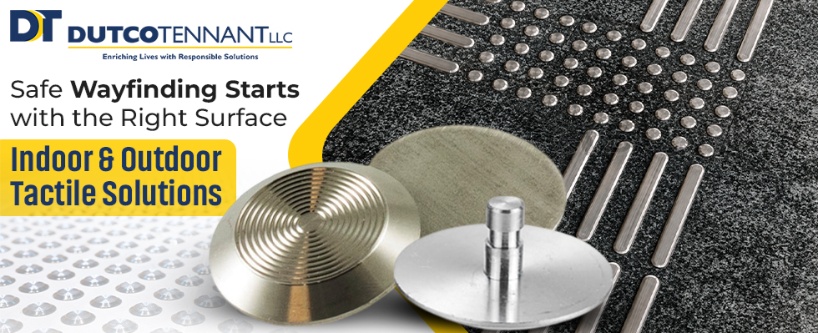
Stainless steel tactile studs are frequently considered for such applications because they offer a durable finish that works well with stone, terrazzo and suitable tiled surfaces.
However, appearance should not determine the selection alone. The raised profile must remain detectable, and the surface should provide appropriate slip resistance and visual contrast.
In locations with frequent cleaning, the fixing system must also withstand repeated contact with cleaning equipment and approved maintenance chemicals.
Outdoor Applications: Performance Under Weather Exposure
Outdoor tactile pathways are installed near pedestrian crossings, public walkways, bus stops, station entrances and other locations where pedestrians need clear guidance.
In the UAE, these installations may experience prolonged sunlight, high surface temperatures, airborne sand and occasional heavy rainfall.
Products intended for external use should therefore be evaluated for:
- Resistance to corrosion and environmental exposure.
- Stability under temperature changes.
- Surface grip in wet or dusty conditions.
- Wear resistance in heavily used pedestrian areas.
- Compatibility with concrete, stone or other external paving.
Material grade and surface treatment are particularly important in coastal areas, where salt exposure can accelerate corrosion in unsuitable metals.
How Do Warning and Directional Patterns Differ?
Before choosing a material, it is necessary to understand the information the tactile surface must communicate.
A tactile ground surface indicator generally uses one of two recognizable patterns, depending on its intended purpose and the applicable accessibility standard.
Warning Patterns for Potential Hazards
Warning indicators use raised dome or stud arrangements to alert pedestrians to locations requiring additional attention.
They may be positioned near stairs, platform edges and pedestrian crossings, with the exact layout determined by the relevant accessibility requirements.
The purpose is to provide a detectable warning before the user reaches a potential hazard.
Directional Patterns for Guided Movement
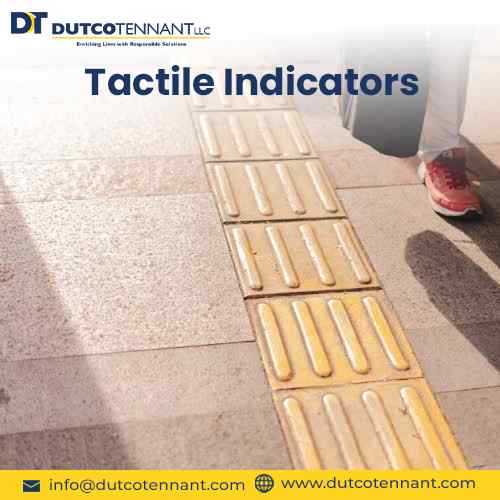
Directional indicators typically feature raised parallel bars that provide guidance along a defined route.
These are particularly useful in large open spaces where walls, kerbs or other continuous physical references are unavailable.
For example, a transport terminal may use directional indicators to connect an entrance with a reception point or designated circulation route.
The pattern must remain consistent throughout the route so that users can interpret it correctly.
What Changes in the Installation Process?
The method of fixing tactile elements depends on the product design and the supporting surface.
Installing on Indoor Stone and Tile Flooring
Individual studs or bars may be fitted into suitable finished floors using manufacturer-approved mechanical fixings or adhesives.
When drilling into marble, granite or ceramic tiles, installers must consider the risk of cracking and ensure accurate positioning.
The surrounding floor should remain even, with the raised tactile profile providing the intended detectable information.
Installing on Outdoor Pavements
External installations may require mechanical anchoring, embedded components or other fixing arrangements suitable for the pavement construction.
Concrete and stone surfaces must be prepared to accommodate the selected product without weakening the surrounding material.
Drainage is another consideration. Water should not accumulate around tactile elements or beneath their fixing points.
For both environments, correct spacing, alignment and secure attachment are essential to maintaining a recognizable pattern.
How Important Are Surface Contrast and Slip Resistance?
Tactile surfaces communicate information through touch, but visual contrast also assists pedestrians with partial sight.
An indicator that blends into the surrounding flooring may be difficult to identify, even when its raised pattern is physically detectable.
In indoor settings, lighting reflections can affect visibility, particularly on polished stone floors. Highly reflective metal finishes may create glare under certain lighting conditions.
Outdoors, strong sunlight, shadows and accumulated dust can change how the surface appears throughout the day.
Slip resistance must also be considered in relation to the surrounding pavement. A suitable product should provide dependable footing under the conditions expected at its installation location.
For this reason, architects should review actual material samples and relevant test information rather than selecting products based only on catalogue photographs.
What Should Be Checked Against Accessibility Standards?
The effectiveness of tactile guidance depends on consistent dimensions, spacing and placement.
Specifications and recommendations for tactile walking surface indicators, including attention and guiding patterns. Local building regulations and accessibility requirements may establish additional or different provisions.
For UAE projects, design teams should verify the requirements applicable to the relevant emirate, authority and building type.
Important checks include:
- Correct raised-pattern dimensions and spacing.
- Appropriate placement before hazards or along guidance routes.
- Required luminance contrast with surrounding surfaces.
- Suitable slip resistance and surface finish.
- Consistent transitions between indoor and outdoor pathways.
Consider a metro station where a tactile route begins on an external pavement and continues through the entrance. The surface material may change, but the directional information should remain understandable across the transition.
This continuity is particularly important in large public facilities where users move between different flooring types.
How Should Maintenance Differ Between Locations?
Indoor tactile surfaces usually require inspection for loose elements, damage from cleaning equipment and wear caused by repeated foot traffic.
External pathways need additional attention to sand accumulation, corrosion, pavement movement and deterioration around fixing points.
Maintenance teams should replace missing or damaged elements before gaps interrupt the intended pattern. Cleaning methods should also preserve the surface finish and slip-resistant characteristics.
The inspection frequency should reflect actual pedestrian traffic and environmental conditions rather than applying the same schedule to every location.
Choosing the Right Tactile Indicators for Your Project
Indoor and outdoor installations share the same accessibility objective, but the conditions affecting their performance are different.
For indoor projects, the main considerations are flooring compatibility, visual appearance, secure attachment and resistance to routine cleaning. Outdoor projects place greater demands on weather resistance, surface durability and long-term fixing performance.
When evaluating a tactile indicators supplier UAE, architects and contractors should review the available product specifications against the intended application, supporting substrate and applicable accessibility standards.
We offer Tactile Indicators Strips and Studs within our Construction Specialities portfolio, supporting accessibility requirements across commercial, residential and public infrastructure projects.
The right combination of material, surface pattern and installation method helps create safer pedestrian routes while ensuring reliable performance in both indoor and outdoor environments.