



A Procurement Guide to Selecting High-Quality Float Type Level Switches
A level switch may be a small component in an industrial installation, but an incorrect selection can lead to significant operational problems. A tank that overfills, a pump that runs dry or a chemical dosing system that fails to respond at the required level can interrupt production and increase maintenance costs.
Selecting a float type level switch requires more than comparing product prices and basic specifications. Procurement teams must understand the liquid being monitored, the required switching function, installation conditions and compatibility with existing control systems. Evaluating these factors before purchasing helps avoid unnecessary modifications and improves long-term reliability.
Start with the Required Level Detection Function
The first step in procurement is identifying what the instrument needs to accomplish. Some applications require a simple signal when liquid reaches a predetermined point, while others need continuous information about the changing liquid level.
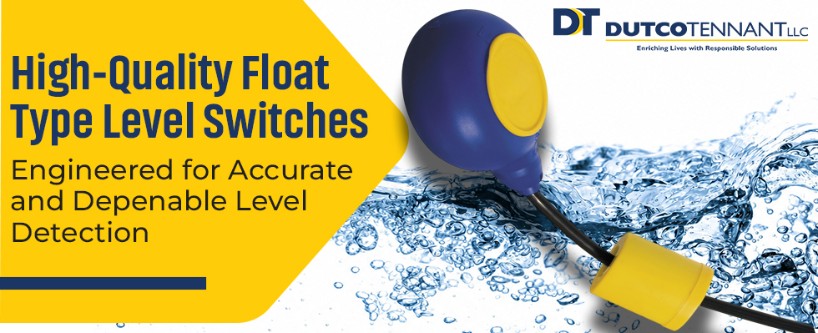
A float switch uses buoyancy to respond to liquid movement. In a typical Magnetic float switch, a magnet inside the float activates a reed switch as the liquid reaches the specified position. This produces an electrical signal that can be used for alarms, pump control or other automated responses.
Know When a Switch Is More Suitable Than a Transmitter
A Liquid level detection switch is appropriate when the process requires confirmation that a specific level has been reached.
Typical functions include:
- Activating an alarm before a storage tank overflows.
- Stopping a pump when liquid falls below a safe operating level.
- Starting or stopping a transfer pump at defined points.
- Monitoring high and low levels in collection sumps.
- Controlling filling and draining operations.
A float level transmitter, by comparison, provides continuous level information rather than only a switching event.
For example, a float type level transmitter with a 4–20 mA output can communicate changing liquid levels to a PLC or monitoring system.
This distinction matters during procurement. Ordering a switching device when continuous measurement is required can create compatibility problems and additional installation expenses.
Match the Instrument with the Liquid Properties
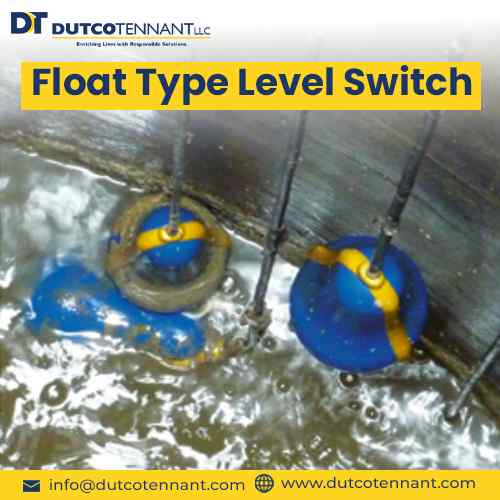
Float-based instruments rely on buoyancy, so the characteristics of the liquid directly influence their performance.
A device suitable for clean water may not be appropriate for aggressive chemicals, viscous liquids or fluids containing suspended solids.
Check Density and Chemical Compatibility
The float must have sufficient buoyancy to operate correctly in the process liquid. Low-density fluids may require a different float design from those used in conventional water applications.
Chemical compatibility is equally important because the float, stem and other wetted components remain in contact with the liquid.
Common material options include:
- Stainless steel: Suitable for many water, oil and industrial liquid applications, depending on the selected grade.
- Polypropylene: Considered for certain chemical applications where compatible non-metallic materials are required.
- PVDF: Used in selected applications involving chemically aggressive liquids.
- PTFE: Provides chemical resistance for compatible components in demanding process environments.
The final selection should be verified against the actual fluid composition, concentration and operating temperature.
Consider Build-Up and Liquid Movement
Not every liquid allows a float to move freely.
Sludge, crystallization, sticky deposits and suspended solids can interfere with movement along a stem or around a pivoting mechanism. Strong turbulence may also cause repeated switching near the set point.
Procurement specifications should therefore identify whether the process involves agitation, foam, sediment or deposits.
Where these conditions are severe, an alternative sensing technology may be more appropriate.
Select the Right Configuration for the Tank
Tank geometry and available access determine which type of float instrument can be installed conveniently.
A well-matched configuration reduces installation complexity and makes future inspection easier.
Vertical Stem-Mounted Switches
Vertical units are generally installed through the top of a tank or vessel. The float moves along a stem and activates switching points as the liquid level changes.
They are useful when:
- Top-entry installation is available.
- Multiple level points need to be monitored.
- A compact arrangement is preferred inside the vessel.
- The tank has sufficient clearance for unrestricted float movement.
Some configurations support multiple switching points on a single stem, making them useful for applications requiring separate high-level and low-level signals.
Side-Mounted Switches
Side-mounted units are installed through the tank wall and operate as the float rises or falls around its mounting point.
Their compact design makes them suitable for smaller tanks, machinery reservoirs and installations where top access is restricted.
However, the mounting location must correspond to the required switching level, and adequate internal clearance is necessary.
Cable-Suspended Float Switches
Cable float switches are commonly used in sumps, wastewater collection pits and larger tanks.
The suspended float changes position with the liquid level and activates an internal switching mechanism.
These devices can be practical for pump start-and-stop applications, particularly where a simple arrangement is required.
The cable length, available movement and risk of entanglement should be checked before selection.
Verify Electrical and Control System Compatibility
A mechanically suitable switch may still be unsuitable if its electrical characteristics do not match the control system.
Procurement teams should confirm the output type, switching arrangement and electrical ratings before approving the instrument.
Review Switching Logic and Contact Ratings
Float switches may provide normally open (NO), normally closed (NC) or changeover contact arrangements, depending on the model.
The correct configuration depends on how the control system interprets the signal.
For example, a high-level alarm may require a different contact arrangement from a low-level pump protection circuit.
Important electrical details include:
- Contact configuration and switching logic.
- Maximum switching voltage and current.
- AC or DC circuit compatibility.
- Electrical connection and cable requirements.
- Switching frequency and expected operating cycles.
- Compatibility with relays, PLC inputs or control panels.
Where a switch controls a motor or other substantial electrical load, an appropriately rated relay or contactor may be required.
Confirm Continuous Output Requirements
A float liquid level transmitter is more appropriate when operators need to observe the level throughout the measuring range.
Depending on the selected model, continuous instruments may provide 4–20 mA or digital communication outputs.
Before specifying a transmitter, verify its measuring range, required accuracy, supply voltage and interface with the existing automation system.
Choosing the correct signal at the procurement stage prevents unnecessary converters, additional wiring and control-system changes.
Evaluate Operating Limits and Environmental Protection
Industrial tanks may operate under conditions that exceed the capabilities of standard instruments.
Temperature, pressure and environmental exposure must therefore be considered alongside the liquid properties.
Review Process and Ambient Conditions
The selected instrument should be rated for the actual operating conditions, including potential short-term extremes.
Procurement documents should clearly state:
- Minimum and maximum process temperatures.
- Normal and maximum vessel pressures.
- Ambient temperature around the instrument.
- Required enclosure ingress protection.
- Indoor or outdoor installation conditions.
- Any hazardous-area classification.
For outdoor installations in the UAE, the enclosure and cable entry arrangement should also be suitable for dust, heat and environmental exposure.
Check Required Certifications
Oil and gas, chemical processing and other hazardous environments may require instruments with specific explosion-protection approvals.
However, certification must be verified for the exact model and configuration being purchased. The presence of an approval in a product range does not mean every variant is suitable for the same hazardous area.
Where the device forms part of a safety-related system, the applicable functional safety requirements should also be reviewed.
Assess Reliability Beyond the Purchase Price
A lower initial quotation does not necessarily represent better procurement value.
Unexpected instrument failure can cause process interruptions, maintenance callouts and additional replacement expenses.
Review Product Documentation and Service Requirements
High-quality instruments should be supported by clear technical information covering installation, operating limits and electrical connections.
Before placing an order, request:
- Product datasheet and model identification.
- Wetted-material specifications.
- Process connection dimensions.
- Electrical ratings and wiring diagrams.
- Relevant test reports and certificates.
- Installation and maintenance instructions.
- Warranty terms and spare-part availability.
For applications requiring frequent switching, the expected contact life and duty conditions should be reviewed carefully.
A straightforward instrument with suitable specifications may offer better long-term value than a more complex model containing functions the application does not require.
Avoid Common Procurement Mistakes
Many selection problems arise because purchase requests describe only the product category without defining the operating requirements.
For example, requesting a Float level switch for water tank without specifying the tank dimensions, installation point or required contact arrangement leaves important decisions unresolved.
Other common mistakes include:
- Selecting a float that is unsuitable for the liquid density.
- Ignoring chemical compatibility of wetted materials.
- Choosing an incorrect mounting configuration.
- Confusing point-level switching with continuous measurement.
- Overlooking pressure, temperature or electrical limits.
- Failing to verify hazardous-area approvals.
- Not allowing sufficient clearance for float movement.
A detailed technical enquiry helps suppliers identify the correct configuration and reduces the risk of ordering an unsuitable instrument.
Prepare a Clear Technical Enquiry Before Ordering
A well-structured procurement request should describe the application rather than simply naming the instrument.
Consider a wastewater pumping station requiring automatic pump control. The enquiry should identify the liquid characteristics, sump depth, desired start-and-stop levels, electrical interface and installation constraints.
For a chemical storage vessel, the emphasis may shift toward corrosion resistance, process temperature, pressure rating and certification requirements.
Providing this information allows the proposed equipment to be assessed against actual operating needs.
The most useful procurement specification combines process conditions, mechanical requirements and electrical details in one document. This makes technical comparisons between quotations more consistent.
Make a More Informed Instrument Selection
A reliable level monitoring system begins with the correct specification. The required switching function, liquid properties, tank configuration and electrical interface should all be established before comparing available products.
For procurement teams working across water treatment, oil and gas, chemical processing and industrial utilities, careful selection helps reduce installation difficulties and avoid unnecessary maintenance.
We offer the Float Type Level Switch within our Instrumentation, Automation & Network Monitoring portfolio, supporting different industrial liquid-level monitoring requirements.
The right selection balances technical suitability, operational reliability and long-term maintenance costs. A clear procurement specification and proper verification of product documentation help ensure dependable level detection throughout the instrument's service life.