



Top Benefits of Using W1911 Wafer Type Butterfly Valves in HVAC Systems
HVAC systems depend on reliable flow control. Chilled water, condenser water and heating circuits all require valves that can isolate sections of pipework, support commissioning, assist maintenance and operate dependably within limited plant-room space.
A wafer type butterfly valve is widely used in HVAC applications because it offers compact installation, quick operation and effective shutoff in commercial and industrial piping systems. For consultants, contractors and facility managers, the right valve can simplify installation while supporting long-term system performance.
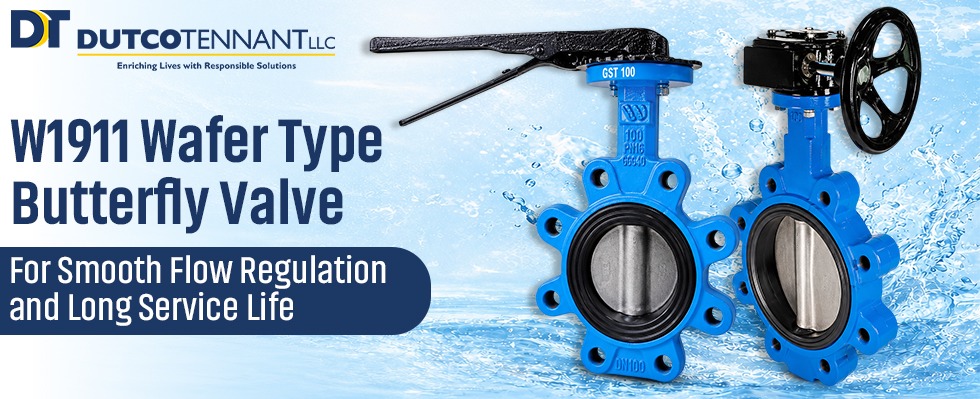
The W1911 Wafer type Butterfly Valve supplied by Dutco Tennant LLC is designed for HVAC, potable water, fire safety and industrial flow control applications. Its DN50 to DN1200 size range, PN16 pressure rating and lever or gear-operated options make it suitable for a broad range of MEP projects across the UAE and GCC.
Benefits of Using W1911 Wafer
Compact Installation in Crowded Plant Rooms
HVAC plant rooms often have limited space. Pumps, chillers, heat exchangers, strainers, expansion joints, headers and pipe supports all compete for room. A bulky valve can make installation and future maintenance more difficult.
The wafer body design fits between standard pipeline flanges, reducing the face-to-face space required compared with many heavier valve types. This helps contractors manage tight mechanical rooms and service corridors without compromising access.
The W1911 butterfly valve supports compact installation, making it practical for chilled water lines, condenser water circuits and general HVAC isolation duties where space planning is important.
Fast Quarter-Turn Operation
HVAC maintenance teams often need to open or close valves quickly during isolation, balancing checks, repair work or commissioning. A quarter-turn valve provides direct operation with clear open and closed positions.
This makes the valve easier to use during routine plant operation. It also helps technicians reduce time spent on simple isolation tasks.
The W1911 wafer type butterfly valve uses quarter-turn operation, allowing fast shutoff and straightforward handling. Depending on the size and operating requirement, it is available in lever or gear-operated configurations.
Suitable for Different HVAC Water Circuits
HVAC systems may include chilled water, condenser water and heating water circuits. Each circuit has different operating conditions, but all need dependable isolation and flow control.
A good valve should support these common water services while maintaining sealing reliability. The seat material and body construction should be reviewed against the fluid type and operating environment.
The W1911 valve is suitable for HVAC and water applications, with resilient seat sealing options including EPDM and NBR. This gives project teams flexibility when selecting valves for different MEP water systems.
Broad Size Range for Project Flexibility
Large HVAC projects often include many pipe sizes, from smaller branch lines to large plant-room headers. Using a valve range that covers multiple sizes can simplify procurement and specification consistency.
The W1911 wafer type butterfly valve is available from DN50 to DN1200. This broad range helps contractors and procurement teams use one valve family across multiple parts of the system, reducing unnecessary variation in the valve schedule.
For district cooling connections, commercial buildings, industrial HVAC systems and large mechanical plants, this size flexibility is a useful project advantage.
PN16 Rating for Common Building Services
Pressure rating is a core specification point in HVAC valve selection. Valves must match the design pressure of the system and the requirements of the consultant’s specification.
The W1911 butterfly valve is available at PN16 pressure rating. This makes it suitable for many commercial and industrial pipeline applications where PN16 is specified for HVAC and water services.
Project teams should still confirm pressure, temperature, fluid type and installation conditions during final selection, but the PN16 rating gives the valve a clear place in common MEP applications.
Reliable Sealing for Isolation Duties
Poor valve sealing can create maintenance challenges. In HVAC systems, leakage through an isolation valve can make repair work slower and affect commissioning confidence.
Resilient seated butterfly valves help provide effective shutoff when correctly selected and installed. Seat material should be compatible with the service and operating conditions.
The W1911 valve includes resilient seat sealing with EPDM or NBR options. This supports reliable isolation in HVAC, potable water and industrial fluid applications where correct material selection is confirmed.
Lower Weight Compared With Heavier Valve Types
Weight affects handling, installation and pipe support design. In plant rooms and risers, lighter valves can simplify installation work and reduce the handling effort required by site teams.
Wafer butterfly valves are generally compact and lighter than many flanged valve alternatives. This can be useful where valves are installed at height, inside congested risers or across multiple floors.
The W1911 wafer configuration supports lower installation space and reduced system weight, helping contractors manage mechanical installation more efficiently.
Corrosion-Resistant Construction for HVAC Environments
HVAC plant rooms can be exposed to moisture, condensation and fluctuating temperatures. Valves selected for these environments should be durable enough for long-term operation.
Corrosion resistance helps maintain valve reliability and reduces avoidable maintenance. It is especially important in chilled water and condenser water systems where condensation or humid conditions may be present.
The W1911 wafer type butterfly valve is described as durable and corrosion resistant, making it suitable for HVAC and industrial flow control applications where long service life is required.
Actuation Readiness for Automated Systems
Modern HVAC systems increasingly rely on automation and building management integration. Some valves may need manual operation, while others may require electric or pneumatic actuation.
When selecting a butterfly valve, project teams should check actuator mounting compatibility. This supports future automation and easier integration into controlled systems.
The W1911 valve includes ISO 5211 actuator mounting compatibility, allowing it to be considered for automated flow control arrangements where the project requires actuation.
Practical Maintenance and Lifecycle Value
A valve should be easy to inspect, operate and maintain. In HVAC systems, poor access or difficult operation can increase service time and affect plant availability.
The W1911 butterfly valve supports simple operation, compact installation and application across a wide size range. These factors help facility teams manage isolation, inspection and replacement planning more efficiently.
For MEP contractors and building operators, lifecycle value comes from reliable shutoff, correct material selection, easy handling and suitability for the intended system duty.
Where W1911 Fits Best in HVAC Systems
The W1911 wafer type butterfly valve is suitable for:
- Chilled water isolation
- Condenser water circuits
- Heating water systems
- Pump inlet and outlet isolation
- Plant-room headers
- Mechanical risers
- Commercial building HVAC systems
- Industrial water and MEP services
Its compact wafer body, PN16 pressure rating, DN50 to DN1200 size range, resilient seat options and lever or gear operation make it a practical choice for many HVAC flow control requirements.
Selection Checks Before Ordering
Before specifying the W1911 wafer type butterfly valve, project teams should confirm:
- Pipe size
- Design pressure
- Fluid type
- Operating temperature
- Seat material requirement
- Manual or actuated operation
- Installation orientation
- Flange compatibility
- Access for operation and maintenance
- Consultant specification requirements
These checks help ensure the valve fits the actual HVAC system, not only the procurement list.
A Practical Valve Choice for HVAC Projects
HVAC systems need valves that are compact, reliable, easy to operate and suitable for long-term service. The W1911 wafer type butterfly valve addresses these needs through its wafer body design, quick quarter-turn operation, resilient sealing, wide size range and corrosion-resistant construction.
Dutco Tennant LLC supplies W1911 butterfly valve solutions for MEP contractors, consultants and procurement teams working on commercial and industrial projects across the UAE and GCC. When selected correctly, this industrial butterfly valve supports efficient installation, dependable isolation and practical maintenance across HVAC water systems.
