



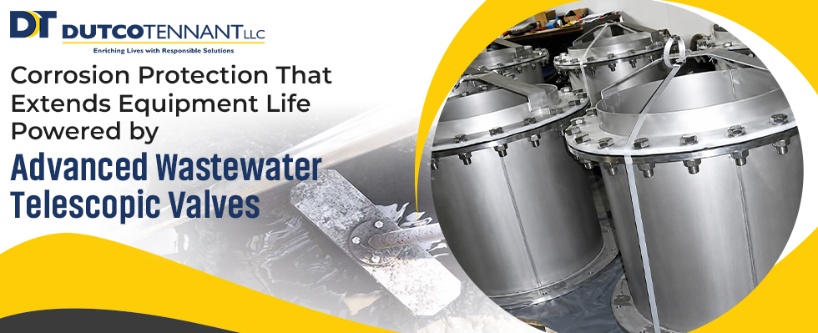
How Corrosion-Resistant Wastewater Telescopic Valves Increase Service Life
Wastewater treatment facilities operate under conditions that can gradually affect the performance of flow-control equipment. Constant moisture, chemical exposure, suspended solids and changing water levels place considerable demands on valves installed in tanks, channels and treatment chambers. When corrosion begins to damage critical components, operators may face leakage, difficult valve operation and unplanned maintenance.
Corrosion-resistant telescopic valves help address these challenges by combining adjustable level control with materials suited to demanding wastewater environments. For facilities investing in long-term Wastewater Solutions, selecting the right valve construction can reduce deterioration, support dependable operation and extend equipment service life.
Why Does Corrosion Affect Wastewater Valve Performance?
Wastewater contains substances that can accelerate material deterioration, particularly when equipment is exposed to fluctuating water levels, dissolved chemicals and gases generated during treatment processes.
Metal components may experience localized corrosion, while deposits and suspended particles can interfere with moving parts. Over time, these conditions can affect sealing surfaces, operating mechanisms and structural integrity.
Common Causes of Valve Deterioration
Several operating conditions influence the rate of corrosion and wear:
- Chemical exposure: Chlorides, acids and other dissolved substances may affect unsuitable materials.
- Hydrogen sulphide: Gas generated in wastewater systems can contribute to aggressive corrosion conditions, particularly when converted into sulphuric acid on exposed surfaces.
- Continuous moisture: Wet and humid environments increase the risk of corrosion in vulnerable components.
- Suspended solids: Abrasive particles can wear contact surfaces and affect moving mechanisms.
- Irregular maintenance: Deposits, damaged seals and deteriorating protective finishes may remain undetected.
The extent of deterioration depends on the wastewater composition, operating temperature, material selection and maintenance conditions.
How Do Telescopic Valves Control Wastewater Levels?
Telescopic valves provide an adjustable overflow arrangement that allows operators to regulate the liquid level within a tank or chamber.
Unlike a conventional fixed-height overflow pipe, a telescopic assembly can be raised or lowered to change the overflow elevation. When the liquid reaches the selected height, it flows into the discharge arrangement.
This makes the equipment useful where process requirements involve controlled liquid levels and periodic adjustments.
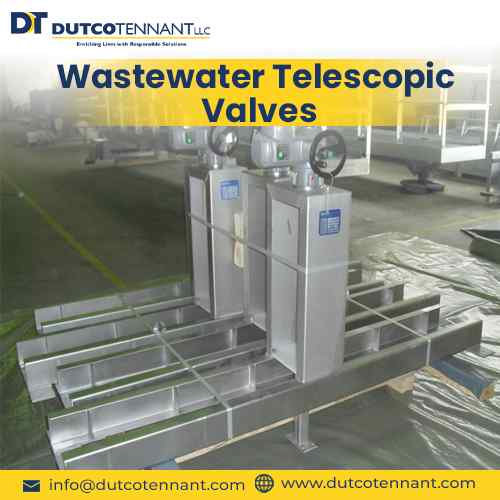
Understand the Operating Principle
A typical telescopic valve arrangement includes a movable overflow tube, a supporting body, sealing components and an operating mechanism.
The vertical position of the tube determines the liquid level at which overflow begins.
Depending on the installation, adjustment may be performed manually or through an appropriate actuation arrangement.
Within treatment facilities, telescopic valves waste water applications may include settling tanks, sludge-handling systems and other chambers requiring adjustable overflow levels.
Where Is Adjustable Overflow Useful?
Different stages of wastewater treatment may require operators to maintain or modify liquid levels.
For example, a settling tank may need a controlled overflow arrangement that supports the intended hydraulic conditions. An adjustable tube allows the overflow elevation to be changed without modifying the permanent tank structure.
The suitability of this arrangement depends on the required flow capacity, available head and process design.
How Do Corrosion-Resistant Materials Extend Service Life?
Material selection is one of the most important factors influencing the durability of a telescopic valve.
The movable tube, body, fasteners and other exposed components must withstand the conditions present in the wastewater system.
Select Materials According to Exposure Conditions
Stainless steel is commonly considered for wastewater equipment because it provides corrosion resistance across many operating environments.
However, not all stainless steel grades offer the same protection. Chloride concentration, chemical composition and temperature influence material suitability.
For example, certain applications may require higher corrosion-resistant grades than those suitable for relatively mild wastewater exposure.
Protective coatings and compatible non-metallic components may also be considered, depending on the valve design.
Procurement teams should review:
- Wastewater chemical composition and pH.
- Chloride concentration and expected exposure.
- Operating temperature and immersion conditions.
- Compatibility of fasteners and sealing materials.
- Required surface finish and protective treatment.
- Accessibility for cleaning and maintenance.
Selecting materials according to actual process conditions helps reduce premature deterioration and unnecessary replacement.
Protect Sealing and Moving Components
Corrosion resistance should not be limited to the main valve body.
The performance of an adjustable assembly also depends on the condition of its sealing surfaces, guides and operating mechanism.
Deposits, corrosion or mechanical damage can increase operating resistance and affect the accuracy of level adjustment.
Appropriate component materials, correct alignment and regular cleaning help preserve smooth movement throughout the operating period.
What Makes Telescopic Valves Different from Other Level-Control Equipment?
Wastewater treatment systems use several methods to regulate liquid levels. The correct selection depends on whether the process requires adjustable overflow, flow isolation or automated level regulation.
A Telescopic drain valve arrangement is particularly relevant where the discharge or overflow elevation must be adjusted.
Other water level control valves may regulate flow through different operating principles, including pressure-based or actuator-controlled mechanisms.
An obturator valve system uses a closure element to restrict or stop flow. Its function and suitability depend on the specific valve design and installation.
These technologies should not be treated as interchangeable simply because they all influence liquid movement.
Compare the Required Functions
Before selecting equipment, identify whether the application needs:
- Adjustable overflow elevation.
- Complete flow isolation.
- Continuous or intermittent discharge.
- Manual or automated operation.
- Precise level monitoring through external instrumentation.
- Compatibility with suspended solids and sludge.
A telescopic valve is often appropriate when adjustable overflow is the primary requirement. Other valve types may be more suitable when tight shutoff or automatic flow modulation is essential.
How Does Valve Design Reduce Wear and Maintenance?
Corrosion-resistant materials provide an important foundation for long service life, but mechanical design also affects how reliably a telescopic valve operates.
In wastewater applications, repeated adjustments can place stress on the lifting mechanism, seals and guiding components. A suitable assembly should allow the overflow tube to move smoothly while maintaining its intended position.
Consider Stem and Seal Construction
Depending on the configuration, telescopic valves may incorporate threaded lifting stems, bronze lift nuts and replaceable wiper seals.
These components serve different purposes:
- Threaded stems: Support controlled vertical adjustment of the overflow tube.
- Lift nuts: Transfer movement through the operating mechanism.
- Wiper seals: Help limit leakage between moving and stationary components.
- Guiding arrangements: Maintain alignment and reduce unwanted movement.
- Self-locking mechanisms: Help retain the selected level setting.
For treatment plants with frequent level adjustments, the accessibility and replaceability of these components can influence maintenance time and overall equipment life.
Where Do Corrosion-Resistant Telescopic Valves Add Value?
The benefits of corrosion resistance become particularly important in facilities where equipment remains continuously immersed or is difficult to access.
Municipal Sewage Treatment Plants
Clarifiers and settling basins require controlled liquid levels to support effective treatment processes. Adjustable overflow arrangements allow operators to manage discharge elevations according to operational requirements.
Corrosion-resistant components help reduce deterioration associated with prolonged wastewater exposure.
Industrial Effluent Treatment
Industrial wastewater can contain chemicals that create more aggressive operating conditions than typical domestic sewage.
In these applications, material compatibility should be established using the actual effluent characteristics rather than assuming that a standard stainless steel grade will be suitable.
Sludge Holding and Treatment Chambers
Sludge-handling facilities may expose valve components to suspended solids, deposits and challenging maintenance conditions.
Selecting suitable materials and accessible operating mechanisms can reduce the likelihood of difficult adjustments and premature component replacement.
How Can Treatment Plants Improve Valve Service Life?
Even corrosion-resistant equipment requires appropriate installation and maintenance.
Incorrect alignment, unsuitable operating conditions or accumulated deposits can shorten service life regardless of material quality.
Follow a Practical Maintenance Approach
Operators should establish an inspection routine based on the process environment and frequency of use.
Important activities include:
- Checking exposed components for corrosion or surface damage.
- Inspecting seals for leakage, wear or displacement.
- Removing deposits that restrict tube movement.
- Verifying smooth operation of the lifting mechanism.
- Checking fasteners, guides and mounting arrangements.
- Confirming that the valve maintains the required overflow elevation.
Replacement parts should match the original material and dimensional specifications.
For new installations, procurement teams should also verify the valve's tube diameter, adjustment travel, mounting arrangement and operator accessibility before finalizing the order.
Choose Reliable Level Control for Long-Term Wastewater Operations
Corrosion-resistant telescopic valves contribute to longer service life by reducing material deterioration and supporting dependable movement in demanding treatment environments.
However, durability depends on more than the selected metal grade. Proper sealing, mechanical alignment, suitable installation and regular inspection are equally important.
For municipal and industrial facilities evaluating Wastewater Solutions, a well-selected telescopic valve can help maintain consistent liquid levels while reducing avoidable maintenance and replacement requirements.
We offer Wastewater Telescopic Valves within its wastewater flow-control portfolio, supporting level management in clarifiers, treatment tanks and sludge-handling facilities.
Selecting the appropriate corrosion-resistant assembly helps treatment plant operators improve operational reliability and maintain effective level control over the equipment's intended service life.