



Ductile Iron Pipes for Municipal Water Networks: Understanding Pressure, Corrosion and Joint Requirements
A municipal water pipeline may run beneath roads, residential areas and busy commercial districts for decades. Once installed, it must withstand changing water pressure, surrounding soil conditions and the demands of continuous operation. Repairing a buried pipeline can also mean excavating roads, interrupting traffic and temporarily affecting water supply.
For this reason, selecting pipes for a municipal network involves more than choosing the correct diameter. Pressure resistance, corrosion protection and joint performance must be considered together.
Ductile iron is widely used for pressurised water infrastructure because it combines mechanical strength with the flexibility needed to accommodate normal installation and operating conditions. However, its long-term performance depends on appropriate pipe specifications, protective coatings and properly selected connections.
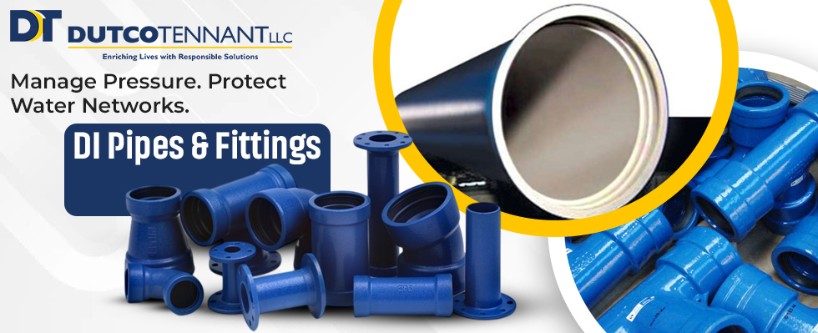
At Dutco Tennant LLC, our DI pipes and fittings portfolio addresses these requirements for potable water distribution and transmission projects across the UAE.
Pressure Is Not Constant Throughout a Water Network
Water pressure changes as it travels through a municipal distribution system. Elevation differences, pumping operations, reservoir levels and consumer demand all influence the pressure experienced by the pipeline.
A pipe located near a pumping station may experience different conditions from one serving an elevated residential district.
The design must also account for temporary pressure changes.
Why Pressure Surges Matter
When a pump stops suddenly or a valve closes too quickly, the water flowing through a pipeline experiences a rapid change in velocity.
This can generate a pressure surge, commonly associated with water hammer.
Depending on the network configuration, the resulting pressure may temporarily exceed normal operating conditions. Negative-pressure events can also occur and create separate risks.
These changes affect not only the pipe barrel but also fittings, joints, valves and other connected components.
For a potable water pipeline, we consider several pressure-related requirements:
- Normal and maximum operating pressure
- Expected surge pressure and pressure fluctuations
- Pipe pressure class and allowable operating limits
- Pressure ratings of fittings, valves and joint assemblies
- Test pressure requirements
- External loading and installation conditions
A pipeline should be assessed as a complete system because its pressure performance is influenced by the compatibility of all connected components.
Selecting the Appropriate Pressure Class
Ductile iron pipes are manufactured in different pressure classes and wall thicknesses.
The appropriate class depends on the pipeline's hydraulic design, diameter, applicable standard and expected operating conditions.
For example, EN 545 covers ductile iron pipes, fittings, accessories and joints for water pipelines, including relevant performance and testing requirements.
However, compliance with a standard does not mean that every product has the same pressure rating.
We review the specified pressure class and manufacturer documentation before matching a pipe or fitting to the project.
Corrosion Protection Begins with the Surrounding Environment
Although ductile iron has strong mechanical properties, it is still an iron-based material and requires suitable protection against corrosion.
A buried pipeline is exposed to soil moisture, salts and other environmental conditions that can influence its service life.
The risk varies considerably between locations.
A pipeline installed in relatively benign soil may require a different external protection arrangement from one passing through saline ground, aggressive fill material or areas with unusual electrical conditions.
External Protection Against Soil Corrosion
Ductile iron pipes commonly use protective external coatings, with the precise system selected according to the product specification and soil environment.
Depending on the application, protection may include zinc-based coatings, finishing layers, polyethylene sleeving or other approved systems.
The suitability of a particular coating should be confirmed against the project requirements and the results of soil assessment.
For UAE infrastructure projects, soil salinity, groundwater conditions and coastal exposure can be important considerations.
Coating continuity also matters. Damage during transportation, handling or installation can leave areas exposed, so inspection and approved repair procedures should form part of the installation process.
Internal Linings for Potable Water Applications
The internal surface of a ductile iron pipe comes into direct contact with the conveyed water.
An appropriate lining helps protect the pipe interior and maintain suitable hydraulic performance.
Cement mortar linings are commonly used in ductile iron water pipes, although alternative lining systems may be specified for particular operating conditions.
For potable water applications, lining materials must also satisfy the relevant drinking-water contact requirements and project approvals.
We consider water chemistry, operating conditions and applicable utility specifications when evaluating internal protection.
The Joint Can Determine How Well the Pipeline Performs
Even when a pipe has the correct pressure rating and corrosion protection, its connections remain critical.
Every bend, branch, valve connection and change in direction introduces a joint that must maintain a watertight seal.
The type of joint also influences installation speed, allowable angular deflection and the method used to resist forces generated by internal pressure.
This is why ductile iron pipe fittings must be selected alongside the pipe rather than treated as separate accessories.
Socket and Spigot Joints for Buried Pipelines
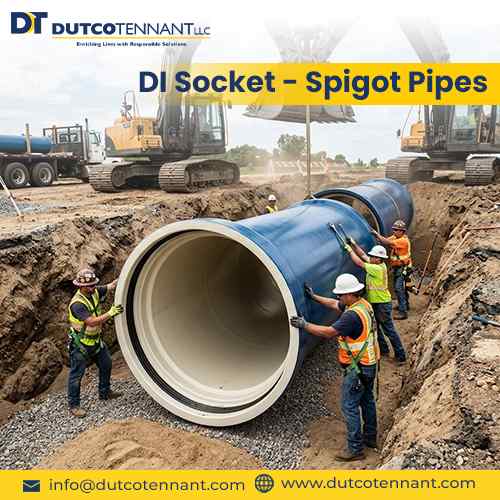
Socket and spigot connections are widely used in buried ductile iron networks.
In a typical push-in arrangement, the spigot end of one pipe enters the socket of the next, where an elastomeric gasket forms the seal.
This type of connection can simplify installation and accommodate limited angular deflection, subject to the manufacturer's specifications.
Our DI socket and spigot pipes are relevant for water transmission and distribution applications where gasketed connections are specified.
However, an important distinction must be made: a standard flexible push-in joint is not necessarily restrained against axial separation.
Where internal pressure creates significant thrust, the design may require thrust blocks, restrained joints or other approved restraint arrangements.
Socket Fittings at Changes in Pipeline Direction
A municipal water network rarely follows a completely straight route.
Bends, tees, reducers and other fittings are needed to connect different sections and distribute water towards separate service areas.
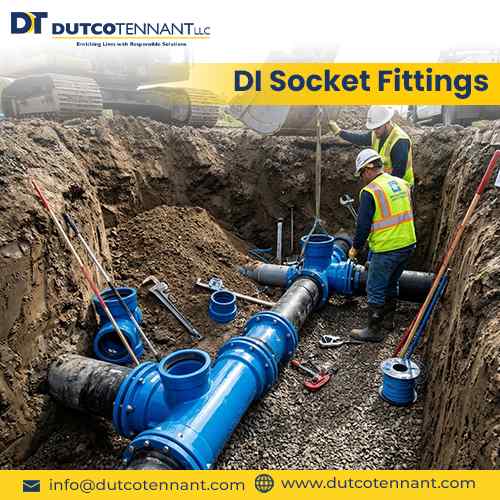
Socket fittings allow these changes to be incorporated into gasketed pipe systems.
Our DI socket fittings portfolio addresses these connection requirements.
The fitting must be compatible with the pipe diameter, joint system, pressure rating and installation arrangement.
At bends and branches, pressure thrust also needs particular attention.
Flanged Fittings for Equipment Connections
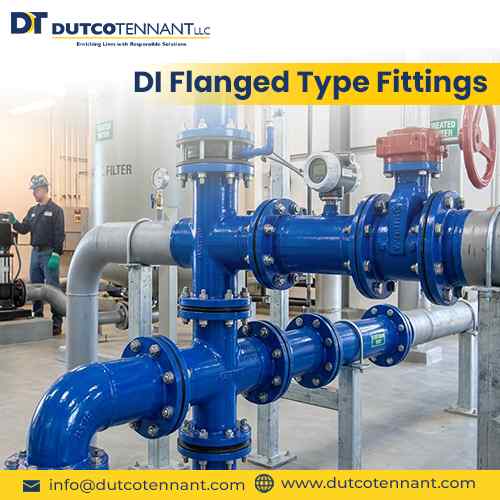
Flanged connections are commonly used where pipelines connect to valves, pumps, meters and other equipment.
Unlike push-in socket joints, a flanged assembly uses mating flanges, a gasket and bolts to create a sealed connection.
This arrangement is useful where a defined mechanical connection is required and components may need to be removed for inspection or maintenance.
Our DI flanged-type fittings support these requirements within potable water infrastructure.
Flange compatibility must be checked carefully, including nominal size, pressure designation, drilling pattern, gasket suitability and bolt tightening requirements.
Why Joint Restraint Matters at Bends and Tees
Consider a buried water main that changes direction through a 90-degree bend.
When the pipe is pressurised, the water exerts forces on the bend. These forces create an unbalanced thrust that must be resisted.
If the connection and surrounding installation do not provide adequate restraint, the joint may move or separate.
The same principle applies at tees, reducers, dead ends and certain valve arrangements.
The restraint method depends on factors such as operating pressure, pipe diameter, soil conditions and the geometry of the fitting.
For this reason, we distinguish between two requirements:
- Sealing performance: The joint must prevent leakage under the specified operating conditions.
- Thrust resistance: The pipeline arrangement must resist the forces generated by internal pressure.
A joint can provide an effective seal without independently satisfying the required thrust restraint.
This distinction is especially important during design reviews and when replacing existing pipeline components.
Selecting Pipes and Fittings for Different Parts of the Network
Municipal water infrastructure includes several sections with different operating requirements.
Large-diameter water transmission pipes may carry substantial flows between treatment facilities, reservoirs and major distribution points.
Smaller distribution mains then deliver water towards residential, commercial and industrial areas.
Although the same general pipe material may be used, the design conditions are not necessarily identical.
| Network location | Main consideration | Typical selection focus |
|---|---|---|
| Main transmission pipeline | Pressure, flow and long-distance reliability | Pipe class, lining, coating and joint system |
| Distribution branches | Changes in direction and network connections | Socket fittings and suitable thrust restraint |
| Valve chambers | Equipment access and maintenance | Flanged fittings and compatible connections |
| Buried sections in aggressive soil | External corrosion exposure | Approved protective coating system |
| Pumping station connections | Pressure fluctuations and equipment loads | Pressure rating, flange compatibility and restraint |
The appropriate combination depends on the project's hydraulic calculations, installation environment and authority specifications.
Our DI Pipes and Fittings Portfolio for Water Infrastructure
For municipal water projects, we bring together pipe and fitting options that address different parts of the network.
Our DI pipes and fittings category includes socket and spigot pipes, socket fittings and flanged-type fittings for potable water applications.
The fitting portfolio also includes products associated with Düker, a manufacturer of ductile iron pressure fittings.
These products serve different functions within a complete piping arrangement:
- Socket and spigot pipes for continuous pipeline sections using suitable gasketed joints.
- Socket fittings for bends, branches and changes in diameter within compatible pipe systems.
- Flanged fittings for connections to valves, equipment and other flanged components.
For projects seeking a DI pipe supplier UAE contractors can work with, our focus is on matching the pipe and fitting configuration to the technical specification rather than selecting components solely by nominal diameter.
We consider pressure requirements, joint compatibility, corrosion protection and installation conditions together.
What Should Be Verified Before Procurement?
Before finalising a ductile iron piping package, the project team should confirm the required pipe diameters and pressure classes, applicable standards, approved internal linings and external coatings, fitting types, and joint restraint arrangements.
Manufacturer documentation should also establish whether the selected components meet the required potable water approvals.
Where different manufacturers' products are combined, dimensional and joint compatibility must be verified rather than assumed.
These checks help reduce the risk of installation delays and mismatched components.
Long-Term Reliability Depends on the Complete Pipeline
Ductile iron is an established material for municipal water infrastructure, but material strength alone does not determine pipeline reliability.
Pressure fluctuations influence the forces acting on pipes and fittings. Soil and water conditions determine the protection required against corrosion. Joint design affects sealing, flexibility and resistance to movement.
Each of these factors influences the others.
A well-protected pipe can still experience problems if its joints are unsuitable. A correctly rated fitting may also perform poorly if installation or thrust restraint requirements are overlooked.
By considering pressure, corrosion and joint performance as connected design requirements, we can select DI pipes and fittings that meet the practical demands of municipal water networks.
For potable water infrastructure in the UAE, this coordinated approach supports dependable water transmission, more effective installation planning and long-term serviceability.