



How Non-Contact Radar Level Transmitters Improve Liquid Level Monitoring in Water and Wastewater Systems
Monitoring liquid levels is essential for the smooth operation of water treatment plants, wastewater facilities, pumping stations and industrial storage tanks. Accurate level information helps operators manage water availability, prevent overflows and maintain consistent plant operations.
However, measuring liquid levels can become challenging when tanks contain wastewater, corrosive liquids, suspended solids or chemicals. Environmental conditions such as humidity, vapour, condensation and surface movement can also influence measurement performance.
Non-contact radar technology provides a practical solution by measuring liquid levels without requiring a sensor to be submerged in the liquid. This makes it particularly suitable for applications where direct contact with the material is undesirable.
What Is a Radar Level Transmitter?
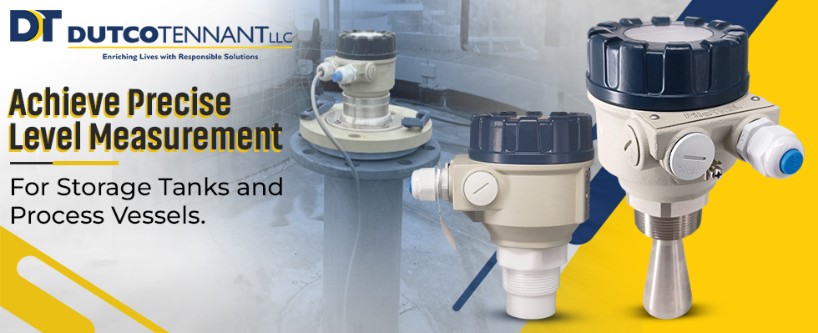
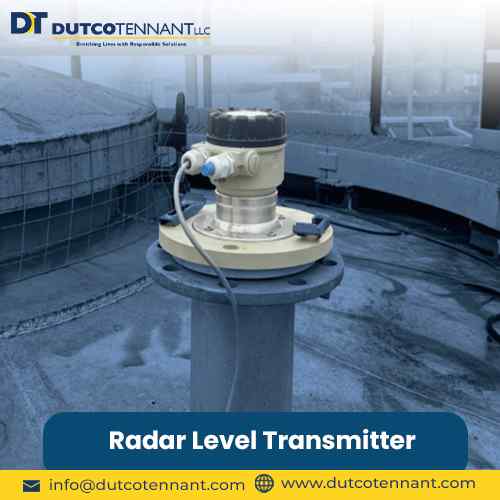
A Radar Level Transmitter is an industrial measuring instrument that uses microwave signals to determine the level of liquid inside a tank, reservoir or process vessel without physically touching the liquid surface.
The transmitter is generally installed above the liquid and continuously monitors changes in its level. The collected information can be transferred to a control panel or central monitoring system, allowing operators to check tank conditions without manually inspecting the facility.
A non-contact radar level transmitter is particularly useful in environments containing wastewater, chemicals, slurries and other liquids where continuous contact with measuring equipment may lead to contamination, corrosion or material build-up.
How Does a Non-Contact Radar Level Transmitter Work?
The working principle of a Non-Contact Radar Level Transmitter for measuring the level of liquid is based on the Working principle of a non-contact radar level transmitter.
The instrument sends microwave signals towards the liquid surface. When these signals reach the surface, they reflect back towards the transmitter.
The transmitter analyses the returning signals to determine the distance between the instrument and the liquid surface. Using the configured tank height, it calculates the current liquid level.
When the tank fills, the distance between the transmitter and the liquid surface decreases. When the tank empties, the distance increases.
This process takes place continuously, providing operators with updated information about the amount of liquid available inside the tank.
Key Technical Features of Radar Level Transmitters
Industrial level monitoring requires equipment that can operate under varying process conditions while providing useful measurement information to operators.
Radar level transmitters incorporate several technical features to support these requirements.
| Technical feature | Practical importance |
|---|---|
| Non-contact measurement | Measures liquid levels without requiring an immersed probe. |
| Continuous monitoring | Tracks changes in liquid levels during filling and emptying. |
| High-frequency microwave technology | Supports focused measurement within suitable tanks and vessels. |
| False echo suppression | Helps identify and reduce unwanted reflections from internal tank structures. |
| Tank linearisation | Converts level readings into estimated liquid volume using configured tank dimensions. |
| Digital display | Allows operators to view measurements and configure supported devices locally. |
| Remote diagnostics | Supports remote configuration and instrument status monitoring on compatible models. |
| Industrial communication interfaces | Enables integration with compatible automation and monitoring systems. |
| Flexible mounting arrangements | Supports installation on different tank and vessel configurations. |
The available measuring range, operating frequency, accuracy, enclosure protection and communication features should be confirmed according to the project's specifications.
How Non-Contact Radar Level Transmitters Improve Industrial Operations
Continuous Monitoring of Liquid Levels
Industrial tanks frequently experience changes in liquid levels as materials are transferred, stored or processed.
A non-contact level transmitter continuously tracks these changes, allowing operators to understand how much liquid is available and identify unusual increases or decreases in tank levels.
This information supports better inventory management and process planning.
Reducing the Risk of Tank Overflows
An overflowing water or chemical storage tank can result in material wastage, equipment damage and operational disruptions.
Radar level transmitters provide continuous measurement information that can be used by compatible control systems to generate high-level alarms or initiate appropriate control actions.
Critical applications may require independent overflow protection systems for additional safety.
Reduced Exposure to Contamination
Wastewater and industrial liquids may contain grease, suspended solids, chemicals and other substances that can accumulate on submerged equipment.
Since a non-contacting radar level transmitter is installed above the liquid, it avoids continuous immersion in the material being measured.
This helps reduce exposure to contamination and certain maintenance requirements associated with immersed measuring equipment.
Suitable for Challenging Process Conditions
Industrial facilities may experience changing temperatures, humidity, vapour, condensation and surface movement.
Radar technology can support level measurement under many of these conditions when the instrument is appropriately selected and installed.
However, excessive foam, heavy antenna deposits and severe condensation may affect signal quality and should be considered during product selection.
Supporting Automated Industrial Processes
Radar level transmitters can communicate measurement information to compatible industrial control systems.
This information can be used to manage tank filling, operate pumps, generate alarms and monitor storage conditions remotely.
Automated monitoring also reduces the need for frequent manual level inspections, particularly at large or remotely located facilities.
Applications of Radar Level Transmitters Across Industries
Water Treatment Plants
Water treatment facilities use multiple tanks for storing, processing and distributing water.
Radar level transmitters help monitor water availability in storage tanks, reservoirs, settling tanks and treatment chambers. Continuous measurement allows operators to manage water transfer between different stages of the treatment process.
Wastewater Treatment and Sewage Pumping Stations
Wastewater facilities frequently handle liquids containing suspended solids, grease and sewage.
A non-contact radar level transmitter for the water and wastewater industry helps monitor liquid levels in collection chambers, sumps, settling tanks and pumping stations without requiring an immersed measuring probe.
The collected measurements can support automated pump operation and overflow management.
Desalination Plants
Desalination facilities process large volumes of seawater to produce treated water for municipal and industrial use.
Radar level transmitters can monitor seawater storage tanks, treated water reservoirs and concentrated brine collection vessels.
For these applications, the instrument's construction materials and process connection must be suitable for saline and potentially corrosive environments.
Chemical Processing Facilities
Chemical plants store and process liquids that may be corrosive, aggressive or hazardous.
A non-contact radar type level transmitter allows operators to monitor chemical levels without immersing a measuring probe in the liquid.
Suitable antenna materials, process seals and safety approvals should be selected according to the chemical being measured and the operating conditions.
Oil and Gas Facilities
Radar level transmitters can support continuous level measurement in petroleum storage tanks, process vessels and other suitable liquid-handling systems.
The measurement information helps operators monitor storage capacity, manage material transfers and support process control.
Installations in hazardous environments require appropriately certified equipment that meets applicable project safety requirements.
Open Channels and Water Reservoirs
Non-contact radar instrumentation can also be installed above open water surfaces to monitor changes in water levels.
Typical applications include reservoirs, drainage channels, water intake facilities and stormwater collection systems.
In suitable open-channel installations, measured water levels can also be used to calculate flow when an appropriate measuring structure and level-to-flow relationship are provided.
How Radar Level Transmitters Support Automated Wastewater Management
Consider a wastewater pumping station that collects sewage from a residential development before transferring it to a treatment facility.
Wastewater continuously enters a collection chamber, causing the liquid level to gradually increase. A radar level transmitter installed above the chamber monitors these changes without directly touching the sewage.
When the wastewater reaches a predetermined level, the connected control system receives the measurement information and can automatically activate the pump.
As wastewater is transferred to the treatment plant, the liquid level inside the collection chamber decreases. Once it reaches the configured lower operating level, the control system can switch off the pump.
Operators can also monitor the liquid level remotely through a compatible monitoring system.
This arrangement helps manage wastewater collection, reduce unnecessary pump operation and minimise the risk of overflows.
Choosing the Right Radar Level Transmitter for UAE and GCC Projects
Selecting a radar level transmitter begins with understanding the type of liquid being measured and the conditions inside the storage tank or process vessel. Water, wastewater, chemicals and petroleum products have different characteristics that can influence measurement performance.
The tank's dimensions and internal arrangement should also be considered. Pipes, ladders and other structures inside the tank can create unwanted signal reflections. An appropriate mounting position and antenna configuration help reduce these disturbances.
For projects across the UAE and GCC, outdoor installations may be exposed to high temperatures, humidity, airborne dust and coastal corrosion. The instrument's construction materials, enclosure protection and operating temperature range should therefore suit the installation environment.
Compatibility with existing automation systems is equally important. The selected transmitter should support the required communication interfaces so that measurement information can be transferred to control panels and monitoring systems.
For chemical processing, pressurised vessels and hazardous industrial environments, the operating pressure, temperature, material compatibility and applicable safety certifications must also be reviewed before procurement.
Non-Contact Radar Level Transmitter Supplier in the UAE
As a non-contact radar type level transmitter supplier in the UAE, Dutco Tennant LLC supports water infrastructure, wastewater management and industrial process monitoring projects across the GCC.
Its instrumentation portfolio includes radar level measurement solutions for storage tanks, pumping stations, treatment facilities and industrial process vessels.
Consultants, contractors, system integrators and procurement professionals can identify suitable radar level transmitters based on their project requirements, measuring range, installation conditions and automation needs.
Whether for a newly developed facility or an upgrade to an existing monitoring system, selecting the appropriate instrument helps support reliable and continuous liquid level measurement.
Frequently Asked Questions (FAQs)
What is a non-contact radar level transmitter?
A non-contact radar level transmitter is an industrial instrument that uses microwave signals to measure liquid levels without physically touching the liquid.
Where is a radar level transmitter installed?
It is generally installed above the liquid surface, typically at the top of a storage tank, process vessel, reservoir or wastewater collection chamber.
Can radar level transmitters measure sewage and wastewater?
Yes. Radar transmitters are suitable for many sewage and wastewater applications because they do not require a submerged measuring probe, reducing direct exposure to contaminants and deposits.
Can radar level transmitters work in tanks containing foam?
Radar transmitters can operate in certain applications involving foam. However, measurement performance depends on foam thickness, moisture content and the selected instrument's characteristics.
Do radar level transmitters require maintenance?
Although non-contact measurement reduces certain maintenance requirements, periodic inspections, antenna cleaning and functional checks may still be necessary, depending on the operating environment.
Can radar level transmitters support remote monitoring?
Yes. Compatible radar transmitters can communicate with industrial automation and monitoring systems, allowing operators to access liquid level information remotely.
Can radar level transmitters help prevent tank overflows?
Continuous level measurements can support high-level alarms and automated control actions. Critical applications may also require independent overflow protection devices.
Who supplies non-contact radar level transmitters in the UAE?
Dutco Tennant LLC supplies non-contact radar level transmitters for water treatment, wastewater management and industrial process applications across the UAE and GCC.
Advancing Liquid Level Monitoring Through Non-Contact Technology
Reliable liquid level measurement plays an important role in maintaining efficient water management and industrial operations.
Radar level transmitters provide continuous measurement information without requiring direct contact with the liquid, making them suitable for a wide range of storage, treatment and processing applications.
By considering liquid characteristics, environmental conditions, installation requirements and automation compatibility, project teams can select instrumentation that meets their operational needs.
Dutco Tennant LLC supports these requirements through its radar level measurement solutions for industrial and infrastructure projects across the UAE and GCC.