



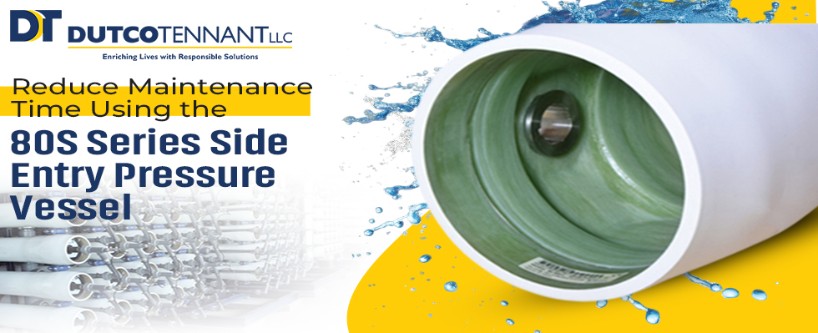
Why Side Entry Pressure Vessel 80S Series Improves RO System Maintenance
Reverse osmosis plants depend on more than membrane selection and pump sizing. Over years of operation, the ease of servicing membranes, replacing components and keeping seals tight has a direct effect on downtime and maintenance effort. In municipal, industrial and commercial facilities, a membrane housing that is difficult to access can turn routine work into a lengthy shutdown.
An RO Pressure Vessel 80S is designed with these practical demands in mind. Its side entry configuration, sealing arrangement and head retention system are intended to make servicing more manageable for plant operators and maintenance teams, particularly where several vessels are installed in a single array.
Understand Where RO Maintenance Time Is Lost
Maintenance effort in an RO plant is rarely caused by one factor. Time is often lost when piping must be disconnected to reach a membrane, when head components require special tools, or when leaks at port connections need to be traced and corrected. These tasks become more demanding in compact plant rooms and in large arrays where vessels are installed close together.
A review of past maintenance activity can help identify where delays occur most often. Records of membrane replacements, seal changes and leak-related interventions provide a useful starting point for judging whether the vessel design is contributing to avoidable downtime.
Recognise the Role of the Membrane Housing
The reverse osmosis membrane housing holds the membrane elements under pressure and connects them to the feed, concentrate and permeate lines. Its design affects how easily the membranes can be reached, how reliably the connections stay sealed, and how much piping work is needed during servicing.
A FRP RO pressure vessel combines filament wound composite construction with a coating suited to indoor and outdoor installations. The Pressure Vessel 80S Series is an 8-inch design intended for standard spiral wound elements, which allows it to fit many existing RO configurations without modification.
Reduce Downtime with Side Entry Access
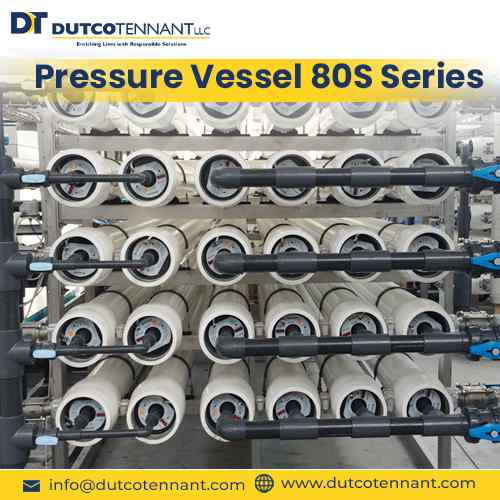
In a side entry design, the feed and concentrate ports are located on the shell rather than at the ends of the vessel. This arrangement can leave the vessel ends clearer, which may make it easier to open the heads and reach the membranes without disturbing the main piping.
For plants with limited working space, this can make routine membrane inspection and replacement more straightforward. The benefit depends on how the system is laid out, but side entry access is generally more convenient than arrangements where end connections must be removed before the membranes can be reached.
Improve Sealing Confidence with the Octagonal Shell
Leaks at side port connections are a common concern in pressure vessels. The CodeLine 80S uses an octagonal shell geometry, which provides a flat surface at each port location. This supports more consistent seating of the port seal, particularly across different operating pressures.
Threaded side ports also allow connections to be mounted and replaced on site. Where a port component needs attention, this can reduce the need to remove the entire vessel from the system, although the actual effort will depend on the installation and the plant’s maintenance procedures.
Simplify Membrane Access with Quick Lock Head Retention
Membrane replacement is one of the most frequent maintenance activities in an RO system. The CodeLine 80S uses a quick lock head retention system that is designed to open without special removal tools. This can shorten the time needed to reach the membrane elements and may help maintenance teams work more efficiently during planned shutdowns.
The head design also integrates the sealing arrangement into the head assembly, which helps avoid head seal roll during reassembly. Careful handling remains important, as correct seal positioning and torque practices are still part of good maintenance procedure.
Maintenance Features Worth Reviewing in the 80S Series
The CodeLine 80S pressure vessel includes several design elements that relate directly to servicing:
- Octagonal shell geometry: Provides flat seating for side port seals.
- Threaded side ports: Allow on-site mounting and replacement of port components.
- Quick lock head system: Supports faster membrane access without special tools.
- Single piece head assembly: Reduces the number of separate parts in non-coded models.
- Integrally wound locking groove: Supports structural strength under repeated pressure cycles.
- UV resistant exterior coating: Suits both indoor and outdoor installations.
The practical value of these features depends on the site conditions and the way the system is operated. They are best assessed against the maintenance tasks the plant performs most often.
Reduce Spare Parts and Servicing Complexity
A membrane housing with fewer separate components can simplify stock management. In non-coded 80S models, the single piece thermoplastic head assembly reduces the number of spare parts that maintenance teams need to hold and identify during servicing.
Standardised fittings across pressure ratings can also help where a plant operates several stages. Technicians who are familiar with one vessel configuration may find it easier to service others in the same series, which can support more consistent maintenance practice.
Use Multiport Connectivity to Simplify Large Arrays
In larger RO systems, piping between vessels adds installation cost and introduces additional connection points that may need inspection. The 80S Series offers multiport connectivity with grooved IPS feed and concentrate ports in 1.5, 2.0 and 2.5 inch sizes, which allows adjacent vessels to be connected directly in suitable layouts.
Fewer pipe runs between vessels can reduce potential leak points and make the array easier to inspect. Permeate port arrangements can also be customised for specific piping requirements, which helps where a standard layout does not fit the plant design.
Match the Pressure Rating to the Application
The CodeLine 80S is available in pressure ratings from 150 to 1200 PSI, covering applications from low pressure pretreatment to brackish water and seawater systems. Selecting the correct rating is important, since an over-specified or under-specified vessel can affect both cost and long-term reliability.
Operating temperature limits, feed water quality and expected cycling conditions should also be considered. Coded models with ASME certification are available for regulated installations, and some include optional sanitary connections for ultrapure or pharmaceutical use.
Plan Maintenance Around the Whole RO System
A well-designed vessel supports maintenance but does not replace a structured maintenance programme. Membrane cleaning schedules, pressure and flow monitoring, and routine inspection of seals and connections all influence how long a system performs reliably.
Pressure vessels should be installed with enough clearance for head removal and membrane handling. Support frames, manifold alignment and access for technicians should be considered during design, since a convenient vessel can still be difficult to service if the surrounding layout restricts movement.
Check Compatibility Before Selecting Membrane Housings
The reverse osmosis membrane housing should be evaluated against the system it will serve. Important considerations include:
- Compatibility with the membrane element size and the number of elements per vessel.
- Pressure rating suited to the feed water type and operating conditions.
- Port sizes and manifold arrangements required by the plant layout.
- Availability of spare parts and adapters for future maintenance.
- Clearance for head removal and membrane replacement.
Certification provides a recognised basis for quality, but project-specific requirements should still be confirmed with the supplier before ordering.
Evaluate Maintenance Value Across the System Lifecycle
The value of a membrane housing should be measured across installation, operation and future servicing rather than the purchase price alone. A more complete assessment considers:
- Expected frequency of membrane replacement and head access.
- Time required for routine servicing and the labour involved.
- Spare parts requirements and ease of sourcing them.
- Piping and installation costs in multi-vessel arrays.
- Risk and cost of leaks or unplanned downtime.
For example, a plant that replaces membranes frequently may benefit more from quick head access than one with long replacement intervals. The actual benefit depends on how the system is operated and maintained over time.
Connect Reliable Membrane Housing with RO Plant Performance
Practical maintenance features can make a noticeable difference in how smoothly an RO plant operates. Side entry access, dependable sealing and straightforward head removal help maintenance teams carry out routine work with less disruption, particularly in systems with multiple vessels.
We offer the Pressure Vessel 80S Series within our Water Treatment range, supplying the Pentair CodeLine 80S across the UAE and GCC. Its side entry design, multiport connectivity and range of pressure ratings make it relevant to municipal desalination, industrial process water, commercial buildings and food and pharmaceutical applications.
The greatest maintenance benefit comes from combining the right vessel selection with sound system design and regular upkeep. When pressure ratings, port arrangements and access requirements reflect real operating needs, the Pressure Vessel 80S can support a more manageable approach to long-term RO system maintenance.