



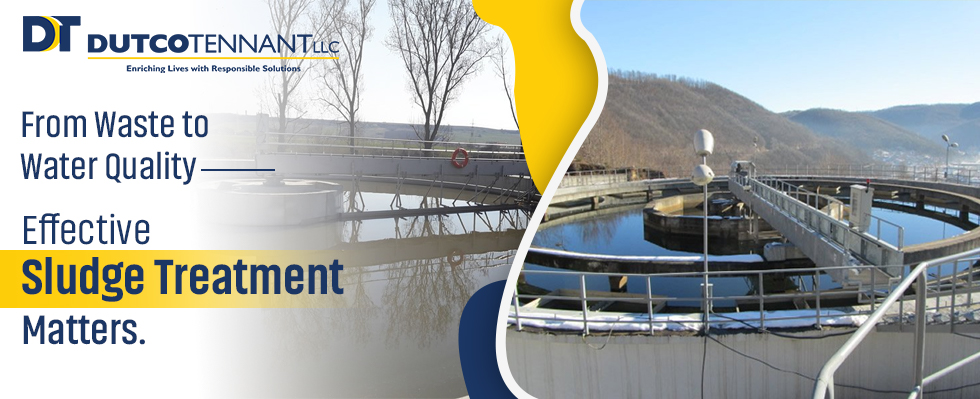
Why Sludge Treatment Is Critical in Wastewater Treatment Plants And How to Get It Right
Every wastewater treatment plant faces the same unavoidable reality: treating water produces solids. For every million litres of municipal or industrial wastewater processed, a significant volume of sludge is generated a concentrated mix of organic matter, pathogens, heavy metals, and water that cannot simply be discharged or ignored. How that sludge is handled, treated, and ultimately disposed of or reused is one of the most complex, costly, and consequential decisions a treatment facility makes. And in far too many operations, it is a decision made inadequately.
Sludge management is the bottleneck that limits the performance of the entire wastewater treatment system. When sludge handling equipment is undersized, outdated, or poorly matched to the sludge characteristics of the incoming waste stream, the consequences cascade across the plant: storage tanks overflow, treatment processes back up, disposal costs escalate, and regulatory compliance for biosolids handling becomes difficult to maintain. In the Middle East, where rapid urbanisation and industrial expansion are generating wastewater volumes that outpace existing infrastructure capacity, the sludge challenge is intensifying rapidly.
The scale of the problem is well documented:
A 2022 report by the International Water Association (IWA) identified inadequate sludge dewatering equipment and ageing sewage sludge handling systems as the primary infrastructure bottleneck limiting the expansion of wastewater reuse programmes across the MENA region a critical constraint for countries facing severe freshwater scarcity.
The industries most affected include municipal water authorities, food and beverage processing, petrochemical and refinery operations, pharmaceutical manufacturing, and pulp and paper production any sector that generates high-volume, high-solids wastewater streams. The operational challenges are consistent: sludge thickening that fails to reduce volumes adequately, sludge filtration that leaves dewatered cake too wet for cost-effective disposal, and sludge waste management programmes that consume disproportionate resources without achieving regulatory biosolids standards.
Modern Sludge Treatment Equipment: From Liability to Managed Resource
Advanced sludge treatment equipment encompasses a suite of integrated technologies designed to progressively reduce the water content, volume, and hazard profile of sludge generated during wastewater treatment transforming what is inherently a waste management liability into a manageable, and increasingly valuable, material stream.
The treatment sequence typically begins with sludge thickening equipment gravity thickeners, dissolved air flotation (DAF) units, or rotary drum thickeners that increase the solids concentration of raw sludge from 0.5–2% to 4–8% total solids before it enters the main dewatering stage. This step dramatically reduces the volume of material that subsequent equipment must handle, improving overall system efficiency and reducing energy consumption downstream.
The core of modern sludge dewatering is accomplished by either a sludge dewatering screw press or a belt filter press, depending on sludge characteristics and throughput requirements. A sludge dewatering screw press operates by conveying polymer-conditioned sludge through a progressively tapering screw enclosed within a filter screen, applying increasing mechanical pressure that squeezes water through the screen while the dewatered cake discharges at the outlet. Belt presses use two tensioned porous belts to sandwich and compress sludge through a series of rollers, achieving high throughput at moderate cake dryness. Both technologies offer continuous, automated operation with significantly lower energy consumption than centrifuge-based alternatives.
Where biosolids reuse or significant volume reduction is the objective, sludge drying equipment including solar drying beds, low-temperature belt dryers, or thermal dryers further reduces moisture content to levels suitable for use as agricultural soil amendment, fuel supplement, or landfill cover material. This final stage is what converts a disposal cost into a potential revenue stream.
Key Features and Technical Advantages
The performance gap between legacy sludge handling approaches and modern integrated sludge treatment equipment is substantial across every operational dimension:
|
Feature |
Traditional Sludge Handling |
Modern Sludge Treatment Equipment |
|---|---|---|
| Dewatering Efficiency | Low; 15–20% dry solids content | High; 20–35%+ dry solids via screw press or belt filter press |
| Energy Consumption | High; centrifuge-heavy processes | Low; sludge dewatering screw press uses up to 80% less energy |
| Automation | Manual monitoring and adjustment | PLC-controlled; fully automated operation |
| Odour & Hygiene Control | Open systems; significant odour risk | Enclosed processing; odour contained |
| Footprint | Large; multiple unit processes | Compact; integrated sludge handling system |
| Maintenance Demand | Frequent; wear-prone mechanical parts | Low; slow-speed operation reduces wear |
| Sludge Volume Reduction | Moderate; high disposal costs | Significant volume reduction; lower transport and disposal cost |
| Biosolids Reuse Potential | Limited; high moisture content | Sludge drying equipment enables Class A biosolids production |
Real-World Applications Across Industries
- Municipal Wastewater Treatment: Municipal treatment plants are the primary application for the full spectrum of sludge handling equipment from sludge thickening equipment on primary and secondary sludge streams through to dewatering and sludge drying equipment for biosolids production. Upgrading to modern industrial sludge dewatering systems allows municipalities to reduce disposal costs, meet increasingly stringent biosolids quality standards, and explore beneficial reuse pathways including agricultural application and energy recovery through anaerobic digestion.
- Food and Beverage Processing: Food processing operations generate high-strength organic wastewater with sludge characteristics that make efficient dewatering particularly challenging. Sludge dewatering screw press systems are well matched to food industry sludge, handling the fibrous, variable-consistency streams generated by abattoirs, dairy processors, and vegetable processing plants without the blinding issues that affect some filter media technologies. Effective sludge filtration in these facilities directly reduces effluent treatment costs and supports compliance with trade waste discharge licences.
- Petrochemical and Refinery Operations: Refinery wastewater treatment generates oily sludge streams with specific handling requirements resistance to hydrocarbon contamination, compatibility with thermal treatment downstream, and reliable performance across variable flow conditions. Industrial sludge dewatering systems specified for refinery service incorporate chemical dosing flexibility and materials construction suitable for the oily, sometimes hazardous sludge characteristics of petroleum processing wastewater.
- Pharmaceutical Manufacturing: Pharmaceutical wastewater sludge frequently contains active pharmaceutical ingredients (APIs) and requires treatment to standards that prevent environmental contamination. Enclosed sludge handling systems with controlled discharge and full process monitoring capability are the specified solution for this sensitive application, where process integrity and audit traceability are non-negotiable operational requirements.
- Pulp, Paper, and Textile Industries: High-volume fibre and dye-laden sludge from pulp, paper, and textile processing requires robust, high-throughput dewatering capacity. Belt filter press technology is widely used in these industries for its ability to handle large volumes of fibrous sludge at consistent cake dryness, directly reducing the weight and volume of material requiring disposal or further treatment in downstream sludge drying equipment.
Real-World Case Studies
Case Study : Municipal Wastewater Treatment Plant Upgrade, Jordan
Challenge: A regional wastewater treatment plant serving a population of 180,000 in northern Jordan was operating ageing gravity thickeners and a vacuum filter dewatering system that consistently produced wet cake at only 14–16% dry solids content. High disposal volumes and transport costs were consuming over 35% of the plant's annual operating budget.
Implementation: The vacuum filter system was replaced with two sludge dewatering screw press units, preceded by a rotary drum thickening stage. Polymer dosing was automated via an integrated control system, and the dewatered cake discharge was connected directly to a covered storage area for scheduled disposal.
Results:
- Dewatered cake dry solids content improved from 15% to 26%, reducing disposal volume by approximately 40%
- Annual sludge disposal and transport costs reduced by 38%
- Energy consumption for the dewatering circuit reduced by 55% versus the incumbent vacuum filter system
- Odour complaints from adjacent properties eliminated within the first month of operation
Visual suggestion: Dry solids content comparison chart; annual disposal cost reduction graph over 3 years.
Benefits and Return on Investment (ROI)
The financial case for investing in modern sludge treatment equipment is driven by four compounding benefit streams that together deliver payback periods typically ranging from 2 to 5 years depending on sludge volumes and incumbent disposal costs.
- Reduced Disposal Costs: Every percentage point improvement in cake dry solids content reduces disposal weight and transport costs proportionally. For a plant processing 10 tonnes of wet sludge per day, improving cake from 18% to 26% dry solids reduces disposal weight by approximately 3 tonnes daily, a saving that compounds 365 days per year.
- Lower Energy Expenditure: Modern sludge dewatering equipment, particularly screw press technology, consumes significantly less energy per tonne of sludge processed than legacy centrifuge or vacuum filter systems. In facilities where energy represents 20% to 30% of operating costs, this reduction is material.
- Reduced Labour Dependency: Automated sludge handling systems with PLC control and remote monitoring reduce manual intervention, improve consistency, and lower exposure to health and safety risks associated with sludge handling.
- Biosolids Revenue or Cost Avoidance: Improved sludge drying can enable Class A biosolids or fuel-grade output, turning waste into a usable product or significantly lowering disposal costs through alternative processing routes.
- Regulatory Compliance Assurance: Consistent equipment performance ensures compliance with biosolids and effluent standards, protecting operating licences and reducing risk of regulatory penalties.
Future Industry Outlook
The wastewater sludge management sector is shifting toward circular economy models, digital control, and stricter environmental regulation, treating sludge as a recoverable resource rather than waste.
- Anaerobic Digestion Integration: Modern sludge thickening combined with anaerobic digestion produces biogas from organic content, turning disposal costs into energy recovery. The remaining biosolids are then dewatered and dried for beneficial reuse.
- Digital Monitoring and Predictive Maintenance: Real-time sensors track sludge concentration, polymer dosing, and cake dryness, enabling optimisation of performance, reduced chemical use, and predictive maintenance before equipment failure.
- Phosphorus and Nutrient Recovery: Advanced systems extract phosphorus and nitrogen from sludge through processes like struvite crystallisation, creating usable agricultural products while reducing treatment loads.
- Net-Zero Biosolids Programmes: Global regulations are pushing utilities toward net-zero disposal through integrated digestion, drying, and reuse systems.
In the Middle East, increasing water reuse demand and tighter disposal rules make advanced sludge treatment equipment a current operational necessity.
Role of Dutco Tennant LLC
For wastewater treatment operators, municipal water authorities, and industrial facility managers across the Middle East seeking access to world-class sludge treatment equipment and sludge handling systems, Dutco Tennant LLC is the established regional partner with the product portfolio, technical expertise, and supply chain reliability to deliver effective solutions.
Dutco Tennant's water and wastewater division offers:
- Product Availability: A comprehensive portfolio of sludge dewatering equipment including sludge dewatering screw press systems, belt filter press units, sludge thickening equipment, and sludge drying equipment sourced from globally certified manufacturers and available through Dutco Tennant's regional supply network.
- Industry Expertise: Process engineers and application specialists with hands-on experience in municipal and industrial sludge system design support clients through sludge characterisation, technology selection, system sizing, and operational commissioning ensuring the specified solution performs as designed for each facility's specific sludge characteristics and throughput requirements.
- Supply Chain Reliability: Dutco Tennant's established logistics infrastructure ensures consistent product and spare parts availability across the GCC, minimising the risk of extended downtime from component supply delays in critical wastewater infrastructure.
Conclusion and Call to Action
Sludge treatment is not a peripheral concern in wastewater management it is the operational and financial heart of a treatment plant's performance. Facilities that invest in properly specified, modern sludge handling equipment from sludge thickening through dewatering to drying and beneficial reuse consistently achieve lower operating costs, better regulatory compliance, and a stronger platform for the resource recovery programmes that define the future of sustainable water management.
The technology is proven, ROI is well established, and regulatory trends are clear. The focus is no longer whether to upgrade sludge treatment systems, but how to implement them effectively for maximum return.
Practical tips for operators:
- Sludge characterisation audit Assess solids content, organic fraction, and dewatering behaviour to ensure correct equipment selection.
- Full lifecycle cost evaluation Compare energy, polymers, maintenance, and disposal costs, not just capital expenditure.
- Prioritise automation PLC-controlled and remotely monitored systems improve consistency and reduce labour dependency.
- Assess resource recovery potential Work with suppliers to evaluate biogas generation or biosolids reuse value, which can significantly strengthen ROI beyond disposal savings.
Ready to take control of your sludge management challenge? Contact Dutco Tennant LLC today to speak with a sludge treatment specialist, request a technology assessment for your facility, or obtain detailed specifications on our sludge dewatering and handling equipment range. Effective sludge management is not just a compliance requirement it is a competitive advantage.
