



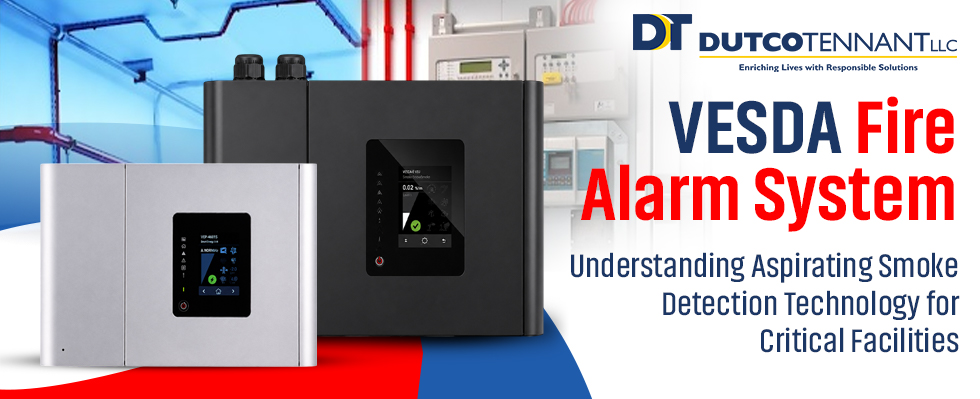
Understanding Aspirating Smoke Detection Technology for Critical Facilities
Critical facilities need fire detection systems that can identify risk before visible smoke spreads through the protected area. In places such as data centres, hospitals, industrial plants, warehouses, power facilities and transport infrastructure, even a short delay can affect safety, uptime and asset protection.
This is where early warning smoke detection becomes highly valuable. A VESDA fire alarm system uses aspirating smoke detection technology to continuously draw air samples through a pipe network and analyse them for very small smoke particles. This helps facility teams investigate potential fire events earlier and respond before conditions worsen.
How Aspirating Smoke Detection Works
Traditional spot-type detectors usually depend on smoke reaching the detector location. In large rooms, high-ceiling areas, fast airflow zones or enclosed technical spaces, smoke may take longer to reach that point.
Aspirating technology works differently. An air sampling smoke detector uses a network of sampling pipes installed across the protected area. Small holes in the pipework collect air from selected points, and the detector analyses the sample for smoke particles.
This active sampling approach helps detect signs of combustion at an early stage. It is especially useful in environments where conventional detection may be affected by airflow, ceiling height, room layout or sensitive equipment arrangements.
Why Critical Facilities Need Earlier Warning
Some facilities cannot afford long disruption after a fire alarm. A data centre may need time to protect servers and maintain business continuity. A hospital needs safe evacuation planning without unnecessary panic. A power facility or industrial plant may need operators to investigate a risk while keeping essential systems under control.
The advantage of aspirating smoke detection is the time it gives teams to act. Early alerts can support staged response, inspection and escalation before a small issue becomes a larger emergency.
In many critical environments, the goal is not only to raise an alarm. The goal is to give responsible teams enough time to understand where the risk is, what action is needed and how to protect people, equipment and operations.
What Makes VESDA Suitable for Sensitive Spaces
A VESDA aspirating smoke detection system is designed for high-sensitivity detection and continuous monitoring. It can detect very low levels of smoke particles and can be configured with multiple alarm thresholds.
This staged alarm approach is useful because every alert does not need the same response. A low-level alert may trigger investigation. A higher-level alarm may activate emergency procedures or connect with a fire alarm panel. This helps facility teams manage events in a controlled way.
The system can also support integration with fire detection panels, building management systems and safety communication systems, depending on project design. For consultants and contractors, this makes coordination with the wider fire safety strategy an important part of specification.
Applications Across Critical Facilities
In data centres and telecom rooms, airflow from cooling systems can move smoke in unpredictable patterns. Aspirating detection can sample air from strategic points and help identify early signs of overheating, cable insulation issues or equipment-related smoke.
In hospitals and healthcare facilities, early alerts support safer response planning. These buildings often include patients with limited mobility, clinical equipment, laboratories and high-occupancy areas.
In industrial facilities and warehouses, smoke behaviour can be affected by high ceilings, large open layouts, stored materials and ventilation systems. Sampling pipe networks can help extend detection coverage across challenging spaces.
In power plants, substations and infrastructure facilities, detection must support asset protection and continuity of service. Electrical rooms, switchgear areas and control rooms benefit from fast identification of potential smoke sources.
In airports, public venues and transport facilities, early detection can support orderly response across large and complex spaces.
Planning the Sampling Pipe Network
The detector is only one part of the system. The sampling pipe layout has a major influence on performance. Pipe routing, sampling hole positions, airflow, ceiling height, room divisions and protected equipment zones all need careful review.
For example, a high-airflow data hall may need different sampling locations compared with a storage warehouse. A cold storage area may need a layout that accounts for temperature and air movement. A facility with enclosed cabinets or electrical panels may need targeted sampling near higher-risk zones.
During design, engineers should consider:
- Room size and layout
- Airflow direction and ventilation pattern
- Ceiling height and access restrictions
- Equipment arrangement
- Maintenance access for pipework and detector units
- Integration with the fire alarm panel
- Alarm threshold strategy
Good planning helps reduce nuisance alarms and supports dependable detection performance.
Reducing Nuisance Alarms Without Reducing Safety
False or nuisance alarms can disrupt operations and reduce confidence in the fire detection system. In critical facilities, this can lead to unnecessary shutdowns, avoidable evacuations or alarm fatigue among operators.
Aspirating systems help address this through filtration, sensitivity settings and staged alarm levels. The system can be configured according to the environment, whether it is clean, dusty, high airflow or temperature-variable.
Commissioning is important here. Auto-learning functions, airflow checks and alarm threshold configuration help align the system with real site conditions. Regular review also helps maintain performance as room layouts, equipment loads or operating patterns change.
Lifecycle and Maintenance Considerations
Aspirating smoke detection needs planned maintenance to remain reliable. Filters should be inspected and replaced according to system guidance. Sampling pipes and holes should be checked for blockage, damage or changes caused by site works.
Event logs and diagnostic information can support maintenance planning and incident review. In facilities with strict safety requirements, this information can help teams document performance and support compliance records.
Facility managers should also plan for future changes. Critical environments often evolve as equipment is added, rooms are repurposed or airflow patterns shift. When those changes happen, the sampling design and alarm settings should be reviewed.
How Our Firefighting Product Support Helps Project Teams
Our Firefighting Products team supports consultants, contractors and facility stakeholders with product selection and technical coordination for fire detection applications across the UAE and GCC.
For VESDA-related projects, this includes reviewing the application, protected environment, integration needs and documentation requirements so that the selected system aligns with the project’s fire safety approach.
Designing for Earlier Response
Aspirating smoke detection is most useful when the protected facility needs time to investigate and respond before a fire event escalates. The right system design considers airflow, sampling location, alarm levels, integration and maintenance from the beginning.
For critical facilities, early warning smoke detection can support safer decisions, better operational continuity and stronger protection for valuable assets. A well-planned VESDA system gives teams the information they need sooner, which is often the most important advantage in fire safety planning.