
Effective Roof Drainage Systems for Commercial and Industrial Buildings: Watts Solutions at Big 5 Global 2026
A commercial roof may cover thousands of square metres, yet its ability to manage rainwater often depends on a relatively small number of drainage outlets. Their positioning, construction, and connection to the waterproofing system can determine how effectively water leaves the building during heavy rainfall.
The same attention is necessary below roof level. Service areas need suitable floor drains, while concealed drainage pipelines require accessible points for inspection and cleaning. When these components are properly coordinated, they help protect building interiors, maintain usable spaces, and simplify long-term maintenance.
Recognising these requirements, Dutco Tennant LLC will present drainage technologies from Watts at Big 5 Global Exhibition 2026, scheduled for 23–26 November 2026 at Dubai World Trade Centre, Hall 3, Stand 3A141.
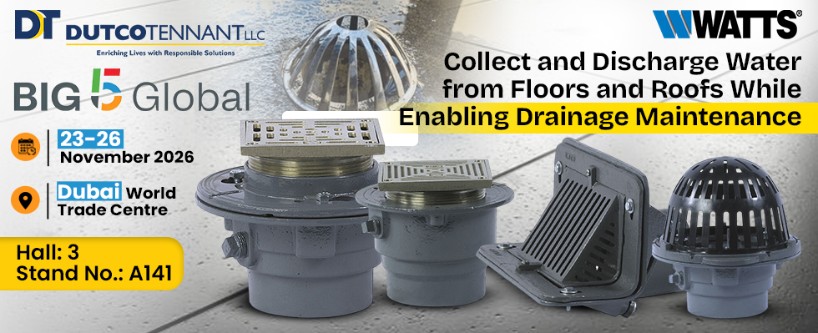
Our featured selection includes the RD-200 Dome Roof Drain, RD-270 Scupper Drain, FD-100-L Floor Drain, and CO-200-S Cleanout. Together, these products demonstrate how specialised drainage components can address different challenges in commercial and industrial buildings.
Rainwater Management at Roof Level: Watts RD-200 and RD-270
Roof drainage arrangements are influenced by architectural design, roof slope, waterproofing details, and the available rainwater discharge routes.
For some buildings, water is collected through outlets installed within the roof surface. Others require drainage through parapet walls, particularly where the roof perimeter forms part of the discharge arrangement.
Watts offers dedicated products for both applications.
RD-200 Dome Roof Drain – Managing Rainwater from Smaller Roof Areas
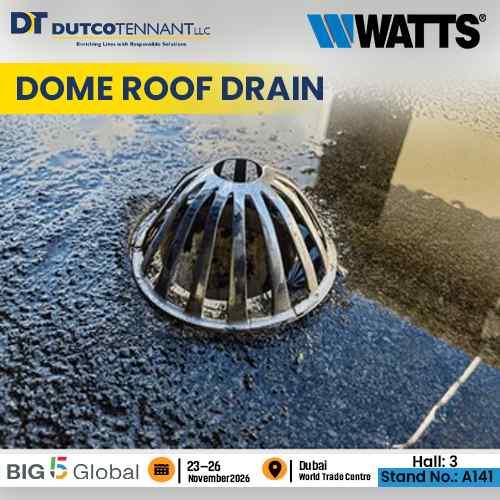
The Watts RD-200 Roof Drain is developed for primary drainage applications on smaller roof areas.
Its construction incorporates an epoxy-coated cast iron body, flashing clamp with integral gravel stop, and self-locking polyethylene dome. The dome is UV-stabilised and helps restrict the entry of larger debris into the drainage opening.
One important aspect of the RD-200 is its integration with the roof waterproofing assembly. The flashing clamp supports the connection between the drainage outlet and the surrounding membrane, while the gravel stop helps limit the movement of loose roofing materials towards the outlet.
The product is available with connection options suited to different installation requirements.
How the RD-200 contributes to roof drainage performance
- Debris Management: The dome strainer helps prevent larger materials from entering the outlet.
- Waterproofing Integration: The flashing clamp accommodates appropriate membrane detailing.
- Durable Construction: The epoxy-coated cast iron body provides a robust drainage component.
- Outdoor Suitability: The UV-stabilised polyethylene dome is intended for exposed roof environments.
For smaller roof sections, entrance canopies, and suitable service structures, the Dome Strainer Roof Drain provides a practical option for collecting and directing rainwater.
It is also relevant to Flat Roof Drainage and Commercial Roof Drain specifications where the outlet capacity and installation arrangement match the design requirements.
As a Rainwater Roof Drain, the RD-200 illustrates how outlet construction and waterproofing compatibility are equally important to the drainage system.
RD-270 Scupper Drain – An Alternative Route Through Parapet Walls
Parapet walls create a distinct challenge in roof drainage. Rainwater collecting behind the parapet must be directed towards an appropriate outlet without compromising the waterproofing system.
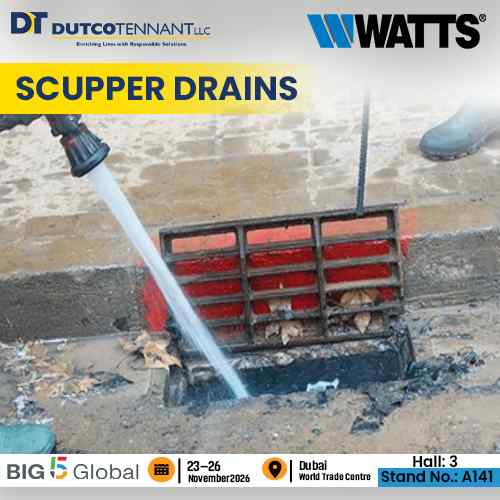
The Watts RD-270 Scupper Drain provides a solution for primary or overflow drainage through parapet walls.
The product features an epoxy-coated cast iron body, flashing clamp, secured angle grate, and no-hub outlet. Its outlet can be rotated by 45 degrees, allowing additional flexibility when coordinating the drain with connected pipework.
The angled grate helps reduce obstruction by larger debris, while the flashing clamp supports the waterproofing connection at the parapet opening.
Unlike a conventional roof drain that collects water vertically, a Roof Scupper Drain allows discharge through the roof perimeter.
This arrangement is particularly useful in projects where architectural or drainage requirements call for a Parapet Drainage Outlet.
The RD-270 can also be incorporated into a separately designed overflow drainage arrangement. In this application, a Roof Overflow Drain provides an additional discharge route when water reaches the specified overflow level.
For commercial developments, this distinction is important. Primary drainage and overflow drainage must be designed according to their intended functions rather than treated as interchangeable outlets.
The RD-270 is therefore a relevant option for Commercial Roof Drainage projects involving parapet walls and perimeter discharge requirements.
Beyond the Roof: Managing Water in Commercial Floor Areas
Rainwater is not the only source of water that a building drainage system must accommodate.
Cleaning activities, equipment discharge, maintenance operations, and accidental water accumulation can create drainage requirements within internal spaces.
These conditions are particularly relevant in commercial kitchens, utility rooms, service corridors, and suitable industrial areas.
FD-100-L Floor Drain – Built for Heavy Commercial Traffic
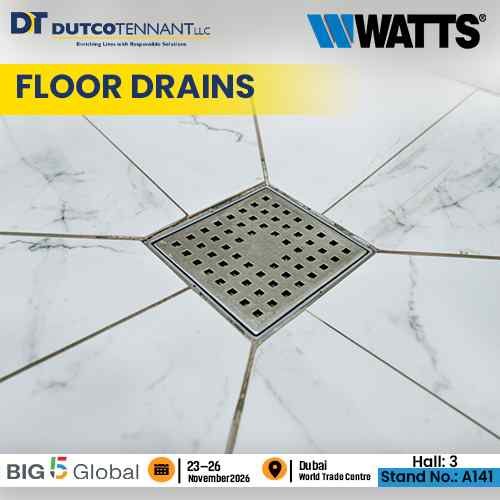
The Watts FD-100-L Floor Drain combines surface water collection with construction features intended for demanding commercial floor environments.
Its epoxy-coated cast iron body includes an anchor flange, reversible clamping collar, and primary and secondary weepholes. An adjustable nickel bronze square strainer with a heel-proof grate completes the assembly.
The adjustable strainer allows the drainage opening to be coordinated with the finished floor level. This is important where the surrounding floor surface must direct water towards the outlet while remaining suitable for pedestrian movement.
The reversible clamping collar and secondary drainage provisions are also significant where waterproofing is incorporated into the floor construction.
Rather than focusing only on visible surface water, the drain's construction accommodates the management of moisture reaching the drainage layer.
Where the FD-100-L is particularly relevant
- Commercial Service Areas: A Commercial Floor Drain can help manage washdown water and other suitable surface discharges.
- Utility and Maintenance Rooms: Drainage outlets may be required where equipment operation or maintenance creates water discharge.
- High-Traffic Floor Areas: The heavy-duty strainer is intended for locations subject to commercial traffic within the product's specified loading conditions.
- Waterproofed Floor Assemblies: The clamping and weephole arrangement supports appropriate integration with the surrounding floor construction.
For projects requiring an Industrial Floor Drain, the FD-100-L should be evaluated against the expected loading, discharge characteristics, and operating environment.
Its construction makes it a useful option within broader Building Floor Drainage and Plumbing Drainage Solutions specifications.
The Maintenance Detail That Should Not Be Overlooked: Watts CO-200-S Cleanout
Drainage systems are often concealed beneath floors or behind finished surfaces. Once construction is complete, access to these pipelines can become difficult unless suitable maintenance points have been included.
A blockage within a concealed drain line may require inspection or cleaning equipment to be introduced into the pipeline. Without a dedicated access fitting, maintenance can become disruptive and time-consuming.
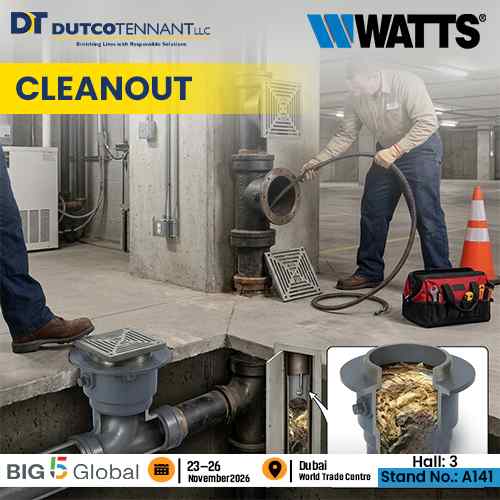
The Watts CO-200-S Cleanout addresses this requirement.
It features an epoxy-coated cast iron body, adjustable square nickel bronze top, gasketed cover, and removable gas-tight brass cleanout plug. The product is intended for light to moderate commercial traffic and incorporates a standard no-hub outlet.
The removable plug provides access to the connected drainage pipe while maintaining a sealed closure during normal operation.
Why Cleanout Accessibility Matters
A Floor Cleanout is not intended to collect water from the floor surface. Its purpose is to provide maintenance access to the drainage system.
This distinction is important during specification because a floor drain and a cleanout cannot simply replace one another.
The CO-200-S supports several practical requirements:
- Pipeline Inspection: Provides an accessible opening into the drainage network.
- Blockage Removal: Allows suitable cleaning equipment to be introduced when necessary.
- Sealed Closure: The gasketed cover and gas-tight plug help maintain closure during normal use.
- Finished Floor Integration: The adjustable top accommodates the surrounding floor level.
For commercial properties, a Drain Pipe Cleanout can help reduce the need to disturb finished surfaces when maintenance is required.
The CO-200-S is therefore relevant to Plumbing Cleanout, Drainage Access Fitting, and Commercial Drainage Cleanout applications where accessible maintenance points form part of the drainage design.
Specifying Drainage Components According to Building Conditions
The performance of a drainage system depends on more than the individual products installed. Roof geometry, rainfall conditions, pipework arrangement, waterproofing, and maintenance access must all be considered during design.
Roof Geometry Determines Outlet Placement
A roof with internal low points may require outlets such as the RD-200, while a parapet-enclosed roof may incorporate RD-270 scupper drains.
The appropriate configuration depends on how rainwater is intended to move across the roof and enter the drainage network.
Outlet placement should also avoid creating areas where water can accumulate unnecessarily.
Waterproofing Connections Require Careful Detailing
Drainage outlets penetrate waterproofed surfaces, creating locations where incorrect installation can lead to water ingress.
Products with flashing clamps and clamping collars support integration with waterproofing systems, but the surrounding installation must still follow the approved project details.
Floor Conditions Influence Drain Selection
A floor drain installed in a commercial service area may experience different loading and discharge conditions from one installed in a light-duty utility space.
For this reason, grate construction, load suitability, floor finish, and drainage capacity should be considered together.
Maintenance Access Influences Long-Term Performance
A well-positioned cleanout can make routine maintenance and blockage removal considerably more practical.
Similarly, accessible roof drain domes and scupper grates allow maintenance teams to remove accumulated debris before it restricts drainage.
These considerations help ensure that drainage infrastructure remains functional beyond the initial installation.
Watts Drainage Solutions Across Different Building Environments
The featured Watts products can be incorporated into different types of developments according to their specific drainage requirements.
In commercial complexes, roof drains and scupper outlets help manage rainwater, while floor drains and cleanouts support service-area drainage and maintenance.
For industrial buildings and warehouses, drainage design must consider extensive roof areas, service zones, and the need to maintain reliable water discharge without disrupting operations.
Hotels and mixed-use developments require drainage components that can be integrated with architectural finishes and concealed building services while remaining accessible for maintenance.
In institutional and public buildings, appropriate drainage arrangements contribute to the protection of roof structures, interior spaces, and service areas.
For projects involving Floor Drain Dubai, Scupper Drain Dubai, or Roof Drain GCC specifications, the appropriate Watts model should be selected according to the building's actual hydraulic and construction requirements.
The same applies when evaluating a Roof Drain Supplier Dubai or other drainage product sources: technical suitability should guide the final specification.
Presenting Watts Drainage Solutions at Big 5 Global 2026
A reliable drainage system is the result of many coordinated decisions. The roof outlet must suit the catchment area, the scupper must integrate with the parapet, the floor drain must accommodate its installation environment, and the cleanout must remain accessible when maintenance is required.
Through our Drainage Solution at Big 5 Global showcase, we will highlight how Watts' RD-200, RD-270, FD-100-L, and CO-200-S address these different aspects of commercial and industrial drainage.
At Dutco Tennant LLC, our focus is on helping consultants, contractors, and project developers identify suitable products for building drainage applications, from rainwater collection to floor-level water management and pipeline maintenance.
We welcome industry professionals attending Big 5 Global Exhibition 2026, taking place from 23–26 November 2026 at Dubai World Trade Centre, Hall 3, Stand 3A141, to explore the featured Watts drainage technologies and discuss their suitability for upcoming projects.
With appropriate drainage planning and product selection, commercial and industrial buildings can achieve more dependable water management while maintaining the accessibility needed for long-term operation.